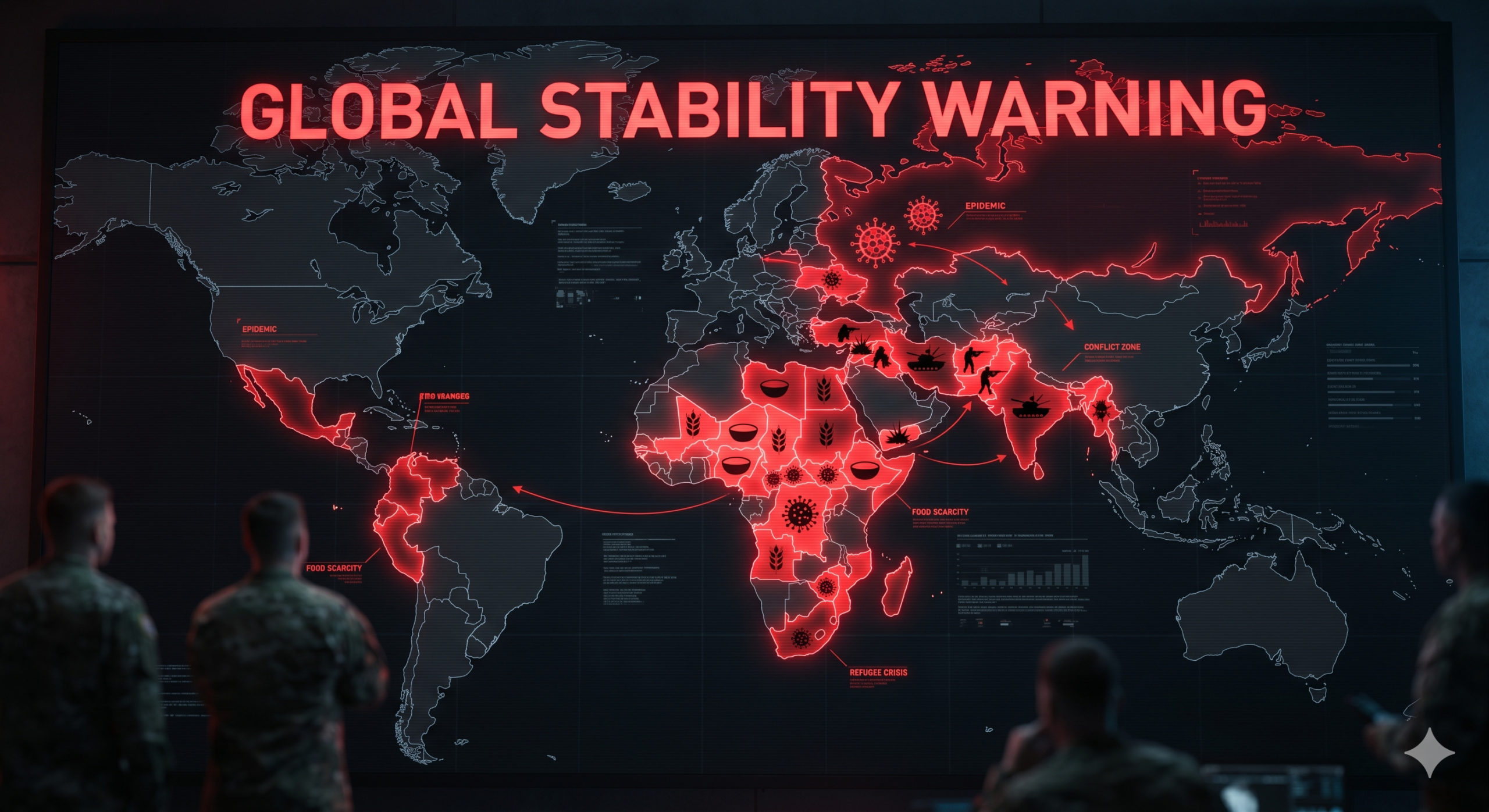
The latest GCI briefing reveals a world still technically in “equilibrium,” yet increasingly strained by disease outbreaks, famine risks, ethnic conflict, and growing geopolitical instability.
Category: Geopolitics & World Affairs
The 58-Point Illusion: Why the “Master Index” Hides a Global Pang StateThe 58-Point Illusion: Why the “Master Index” Hides a Global Pang State
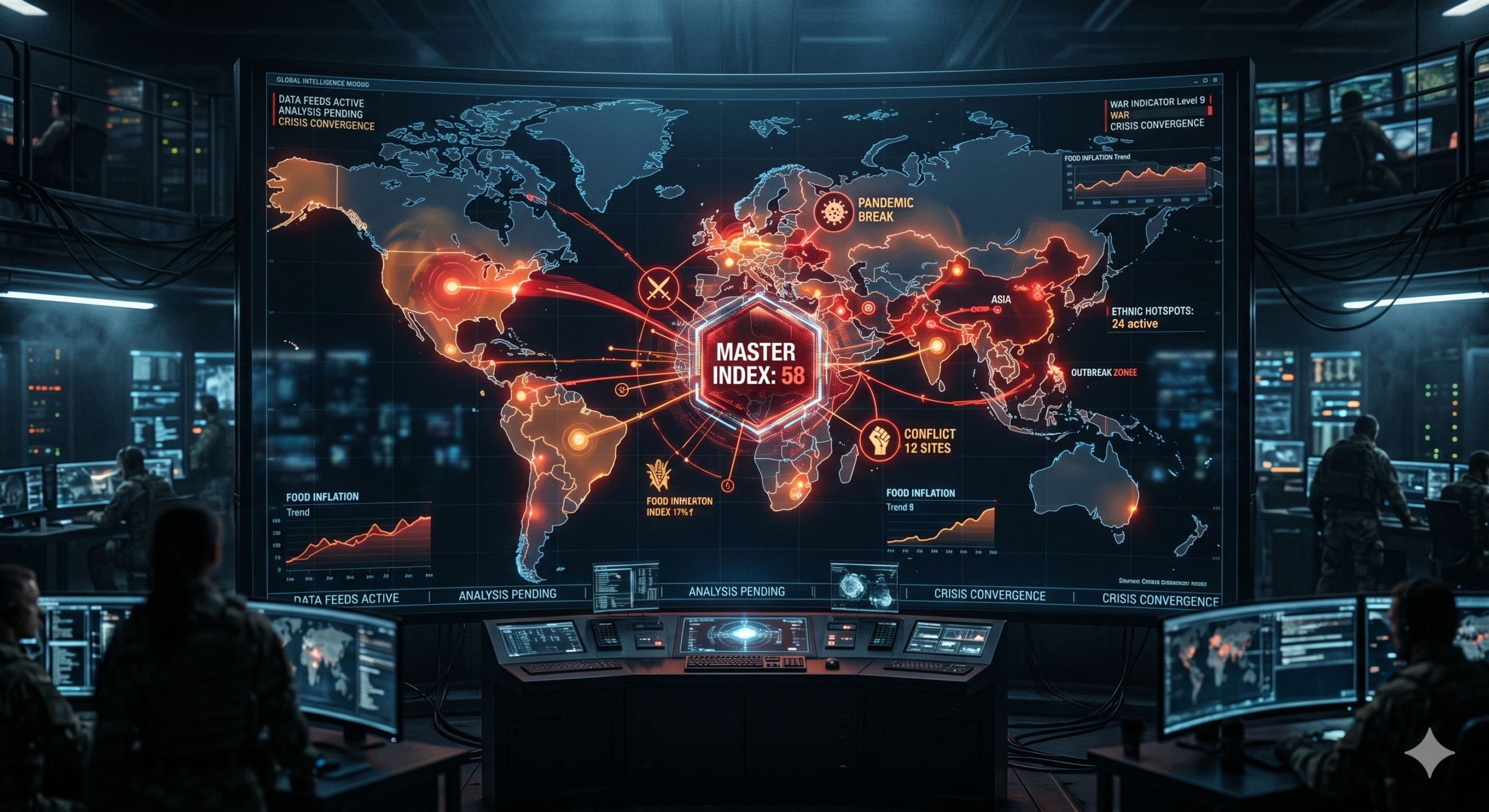
When Stability Metrics Conceal Structural Global Fragility. 1. The Hook: A World in “Elevated” Equilibrium As of May 14, 2026, the global state of stability rests at a deceptive crossroads.
From Monochrome Snacks to Hidden Droughts: 4 Surprising Signals from the May 2026 Crisis ReportFrom Monochrome Snacks to Hidden Droughts: 4 Surprising Signals from the May 2026 Crisis Report
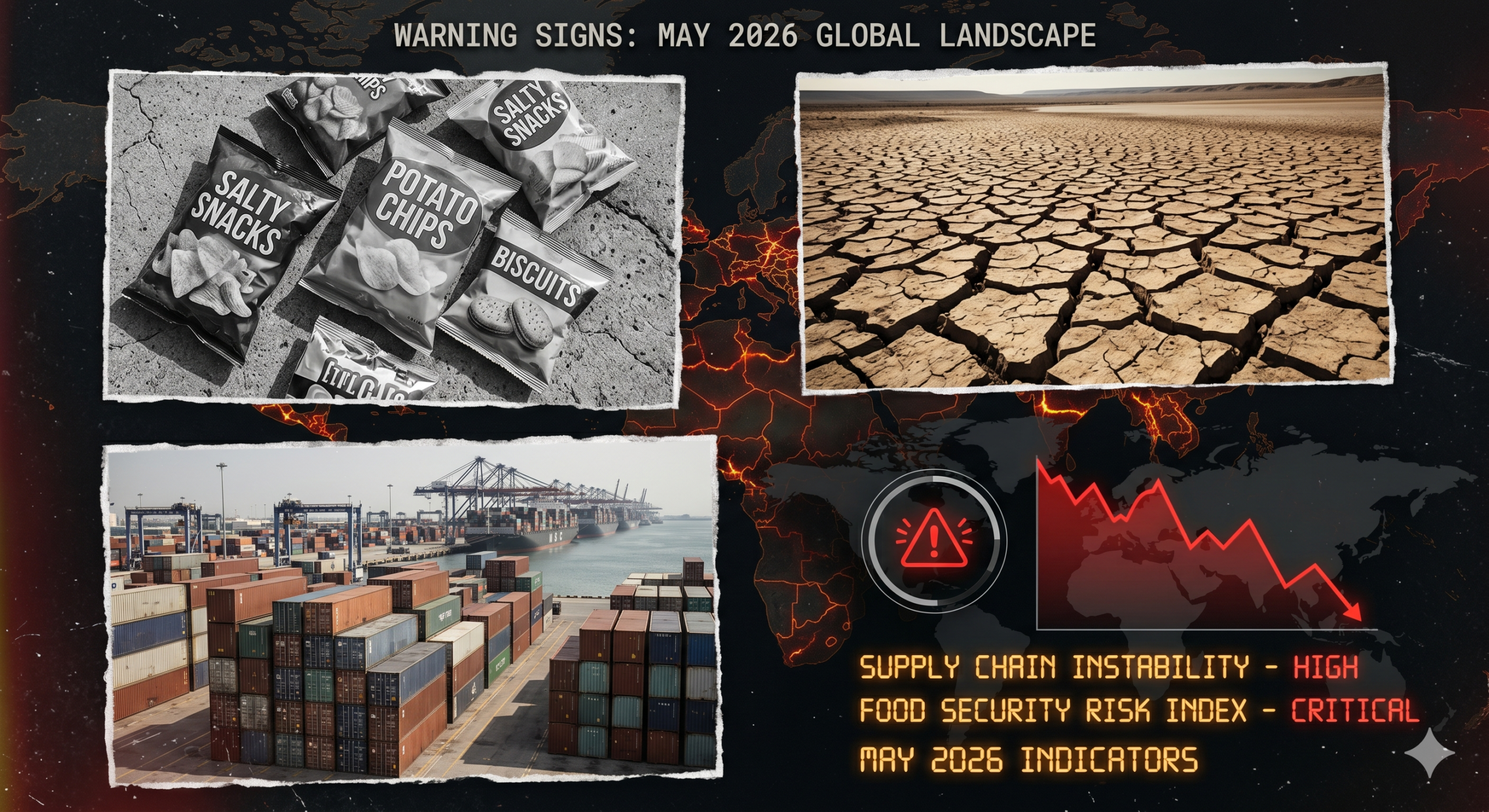
The May 2026 Global Crisis Index contains more than war headlines. These four overlooked signals—from packaging shortages to agricultural droughts—may reveal where global stress is quietly accelerating.
Global Crisis Index Intelligence Briefing: May 2026Global Crisis Index Intelligence Briefing: May 2026
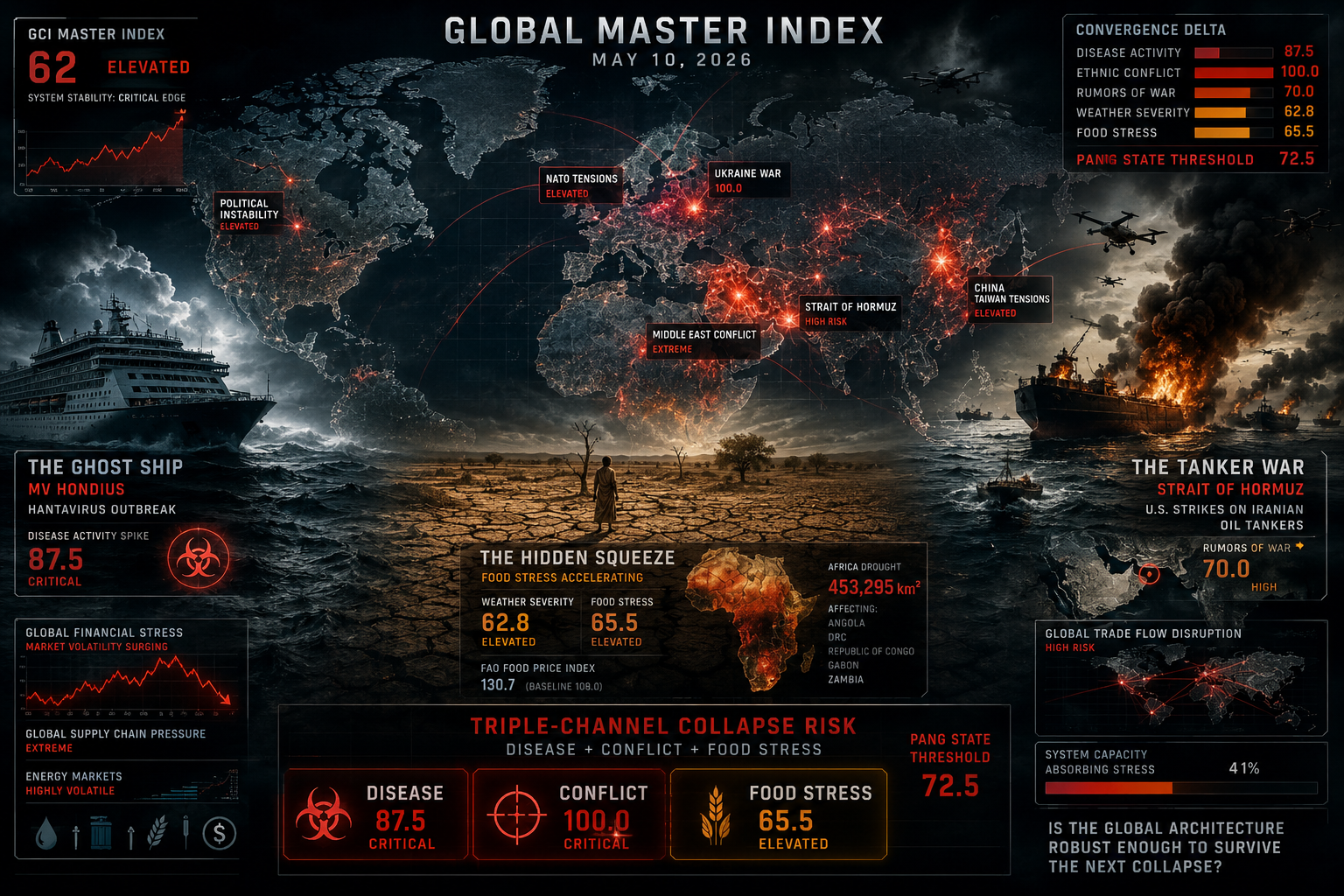
The May 2026 Global Crisis Index reveals a world under mounting pressure. Disease activity and ethnic conflict have entered critical “Pang State” levels while war tensions, droughts, and humanitarian crises
Global Strategic Briefing: Watchman Report Alpha-7 | May 2026 Crisis AssessmentGlobal Strategic Briefing: Watchman Report Alpha-7 | May 2026 Crisis Assessment
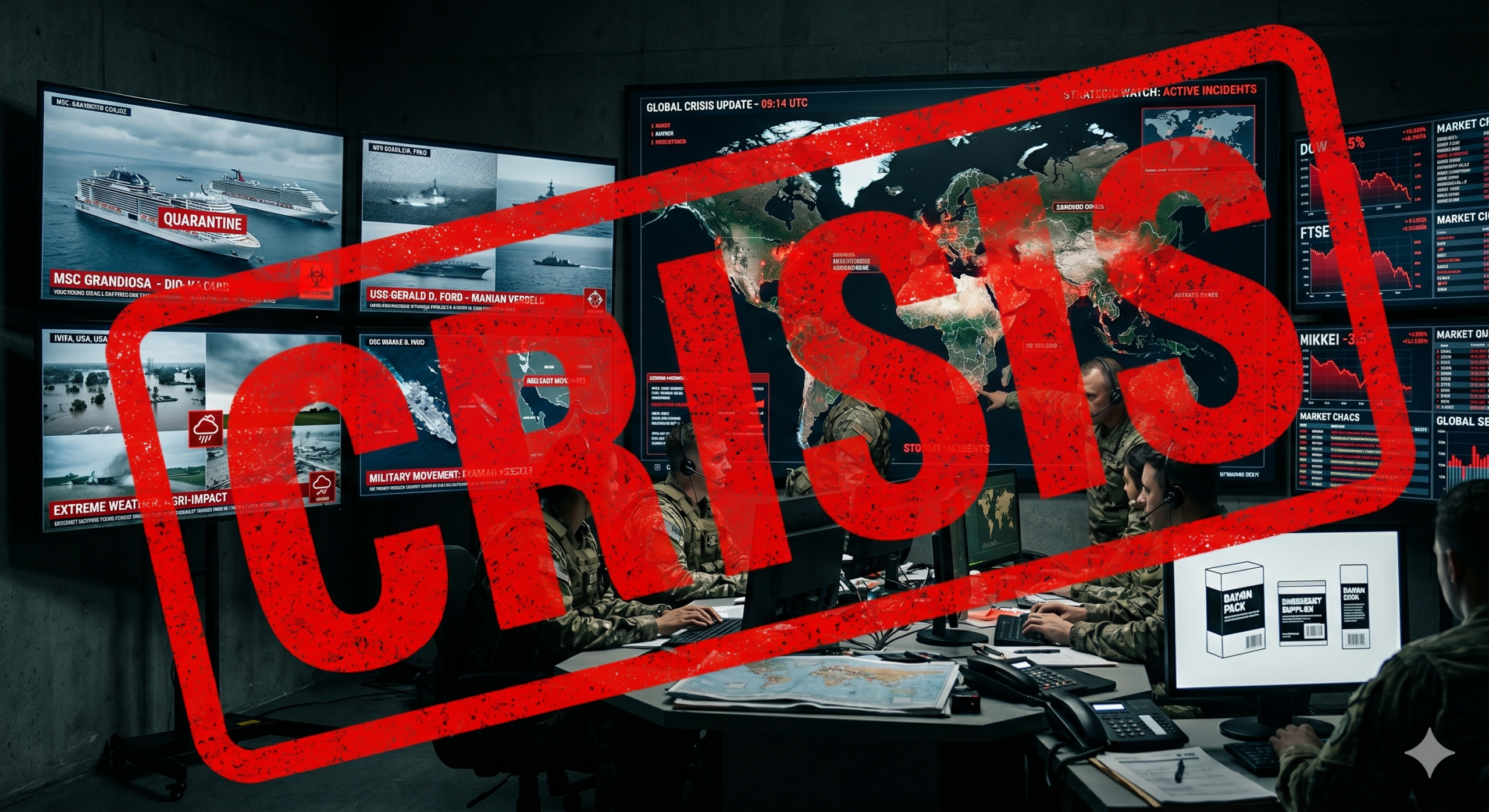
The May 2026 Watchman Report Alpha-7 outlines a world under mounting pressure from disease activity, geopolitical instability, weather extremes, and economic stress.
Why Your Favorite Snack Just Lost Its Color: 5 Deep Shifts from the Alpha-7 Intelligence ReportWhy Your Favorite Snack Just Lost Its Color: 5 Deep Shifts from the Alpha-7 Intelligence Report
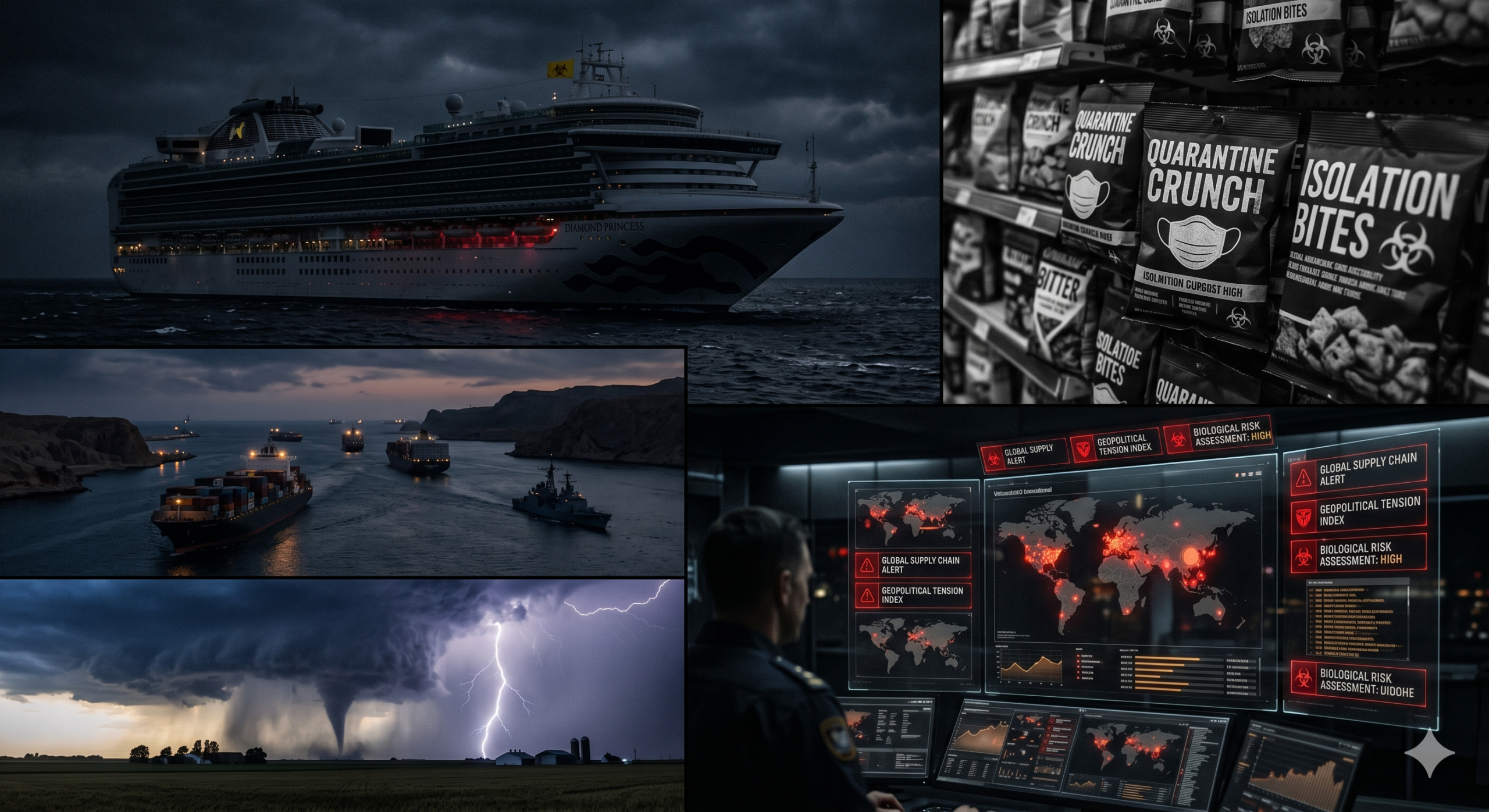
The Alpha-7 Intelligence Report argues that collapse may not arrive with catastrophe, but through the slow erosion of stability—from food prices and weather chaos to quarantines and supply chain failures.
The Convergence Curve: 4 Critical Insights from the Alpha-7 Global Risk ReportThe Convergence Curve: 4 Critical Insights from the Alpha-7 Global Risk Report
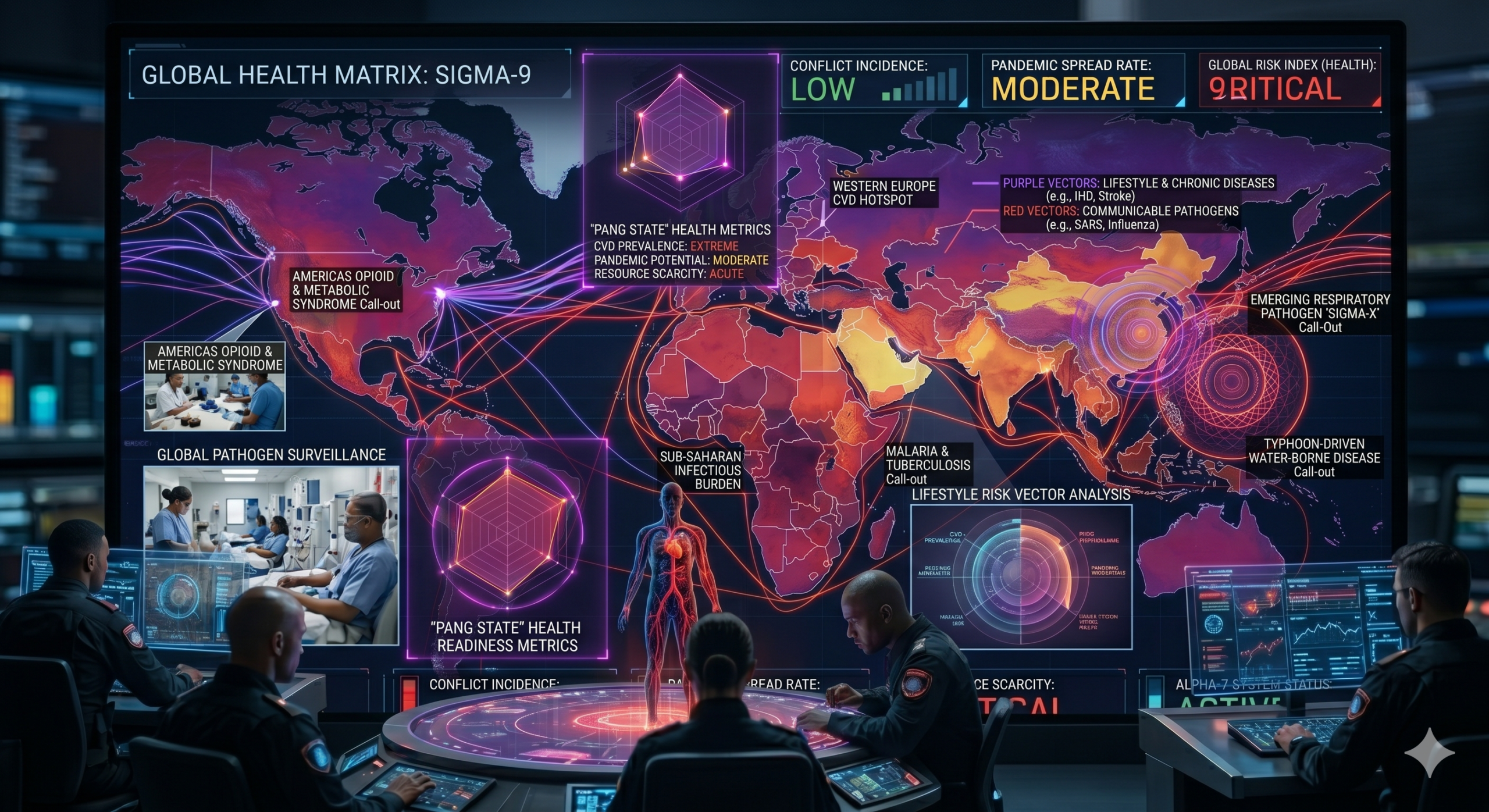
The Alpha-7 Global Risk Report warns that disease outbreaks, Strait of Hormuz tensions, and weather-food convergence patterns are beginning to amplify one another beneath an outward appearance of market calm.
Alpha-7 Global Risk Assessment Briefing – May 10–11, 2026 | Disease, Hormuz & Food StressAlpha-7 Global Risk Assessment Briefing – May 10–11, 2026 | Disease, Hormuz & Food Stress
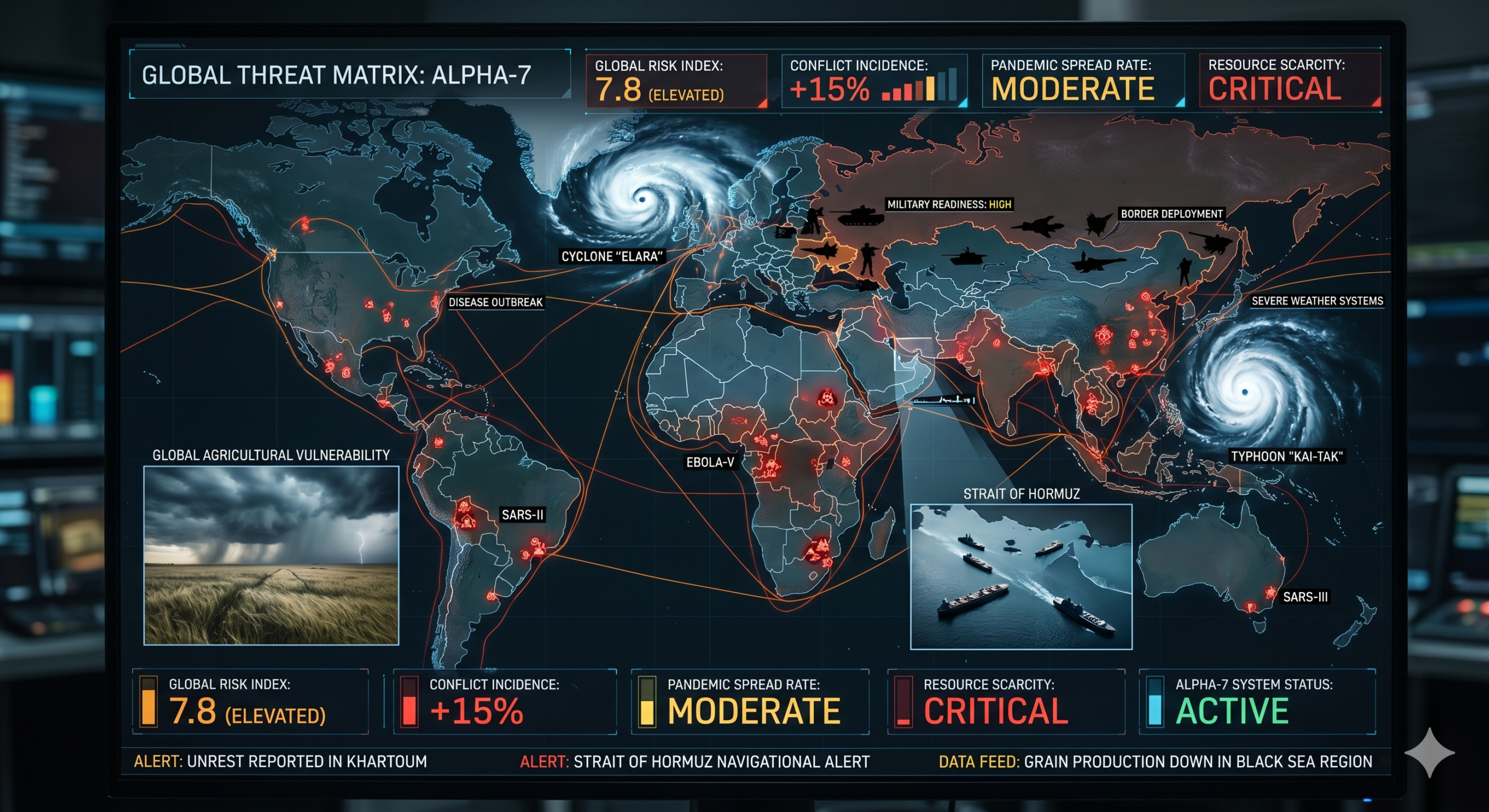
The Alpha-7 Master Index remains elevated as disease activity reaches critical levels, geopolitical tensions intensify in the Strait of Hormuz, and weather-related agricultural compression begins impacting global food stress indicators.
The Ghost Ship and the Tanker War: Why the Global Master Index is Shifting Toward a Triple-Channel CollapseThe Ghost Ship and the Tanker War: Why the Global Master Index is Shifting Toward a Triple-Channel Collapse
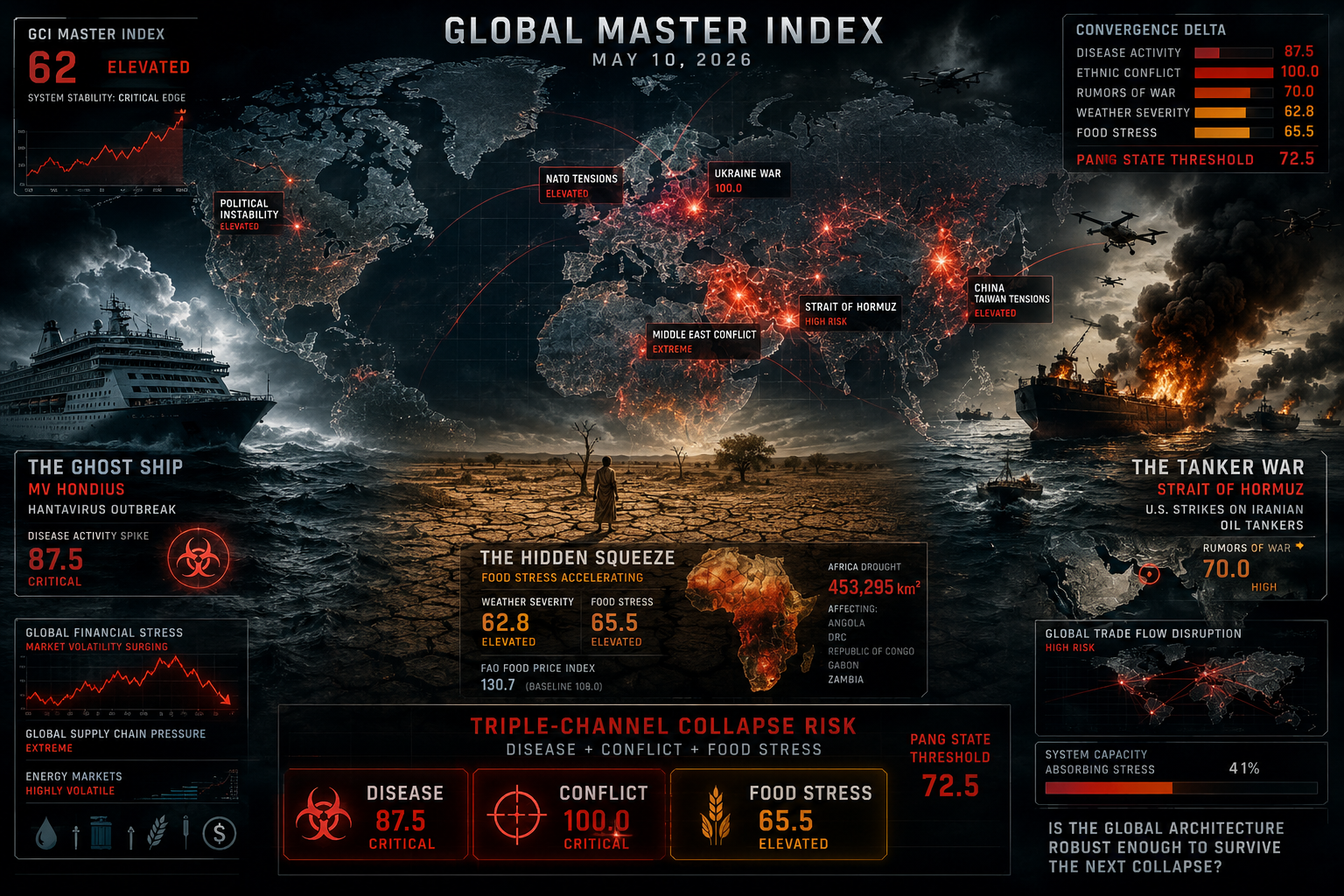
From a hantavirus outbreak at sea to tanker warfare in the Strait of Hormuz, the Global Crisis Intelligence Master Index signals a dangerous convergence of biological, military, and economic instability.
Global Crisis Intelligence Briefing: May 10, 2026Global Crisis Intelligence Briefing: May 10, 2026
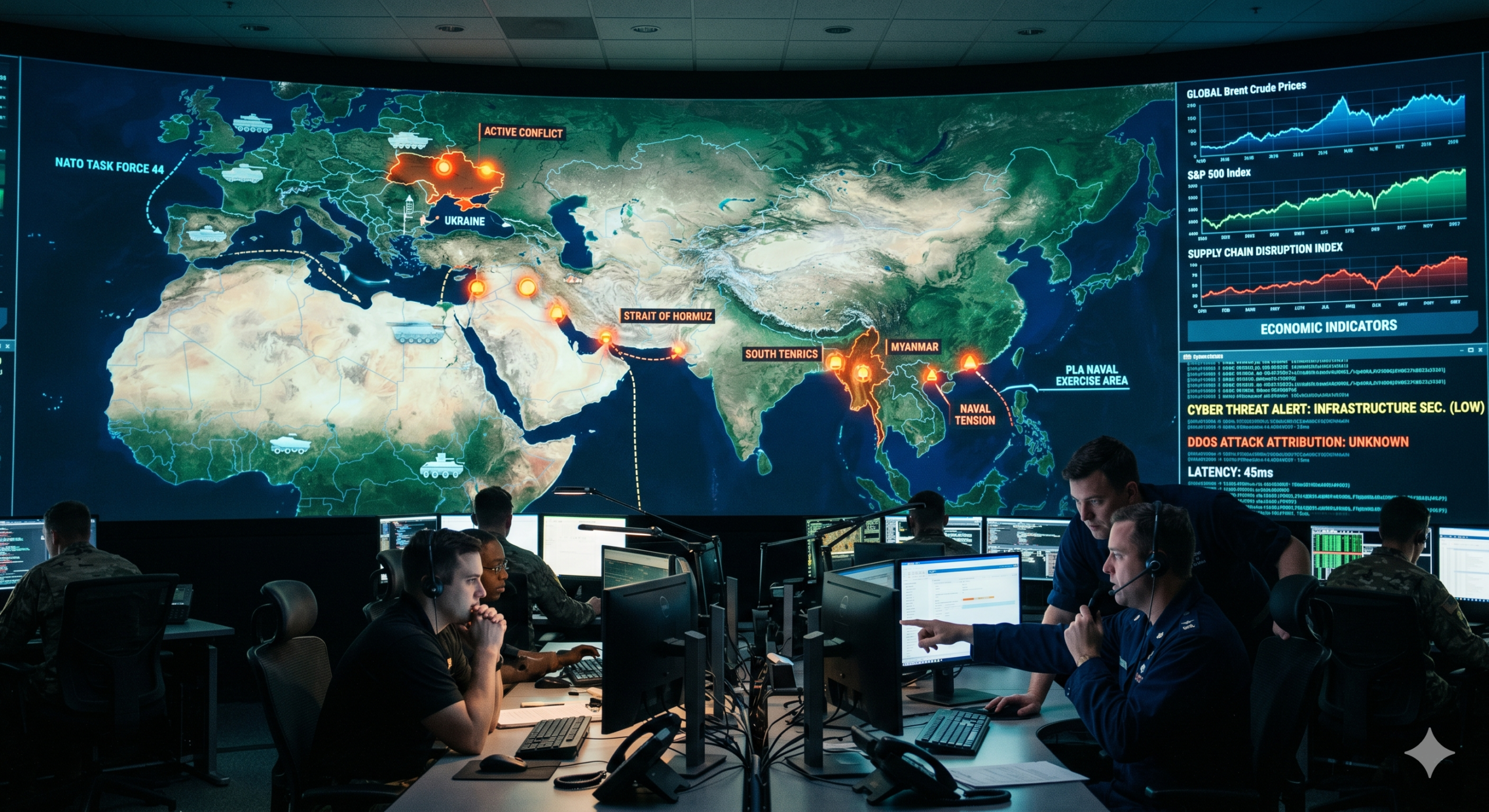
The latest GCI Briefing examines the rising pressure points shaping the global landscape—from military tensions and economic uncertainty to cyber warfare and strategic realignments among world powers.