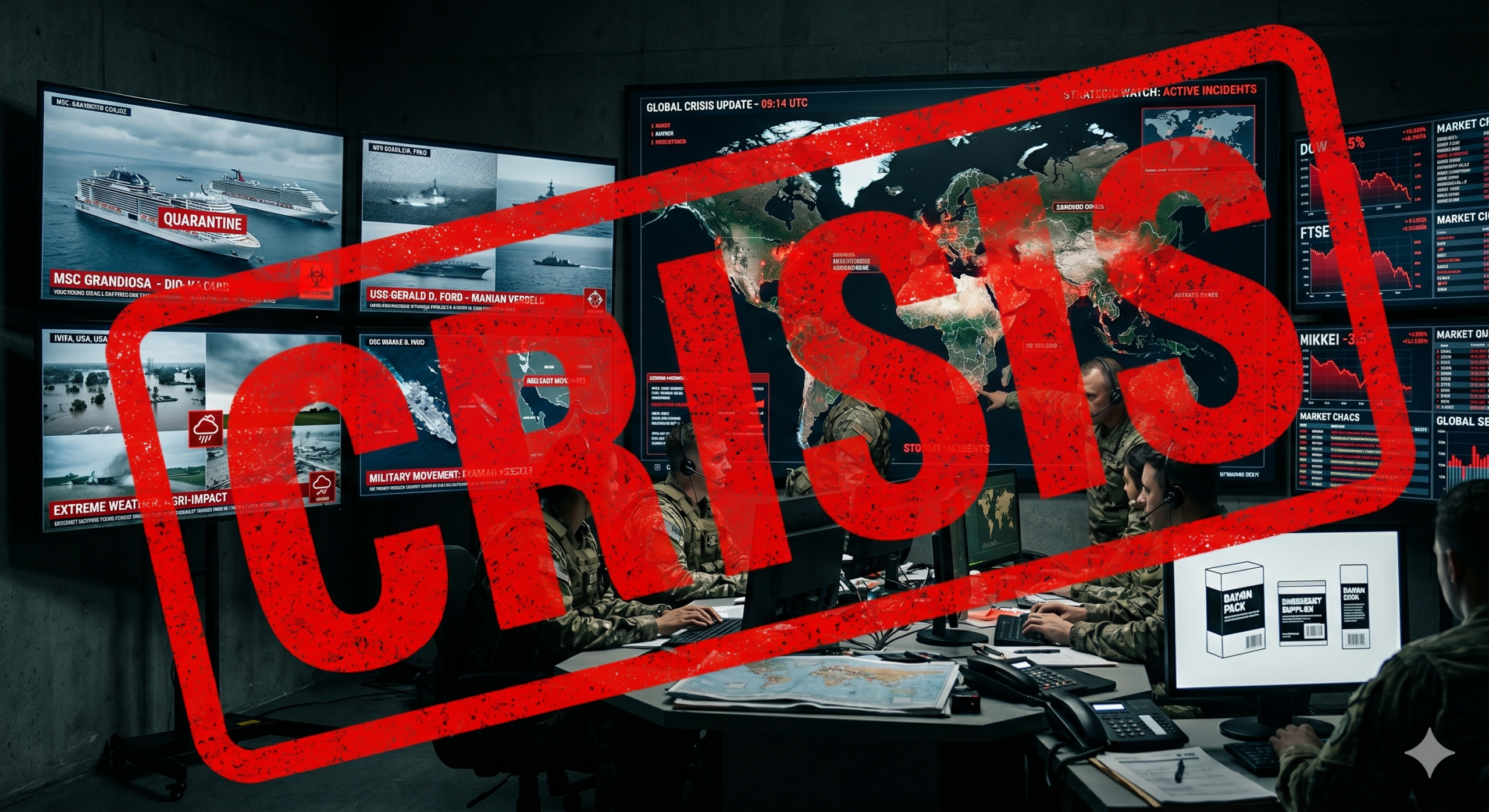
Global Strategic Briefing: Watchman Report Alpha-7
Executive Summary
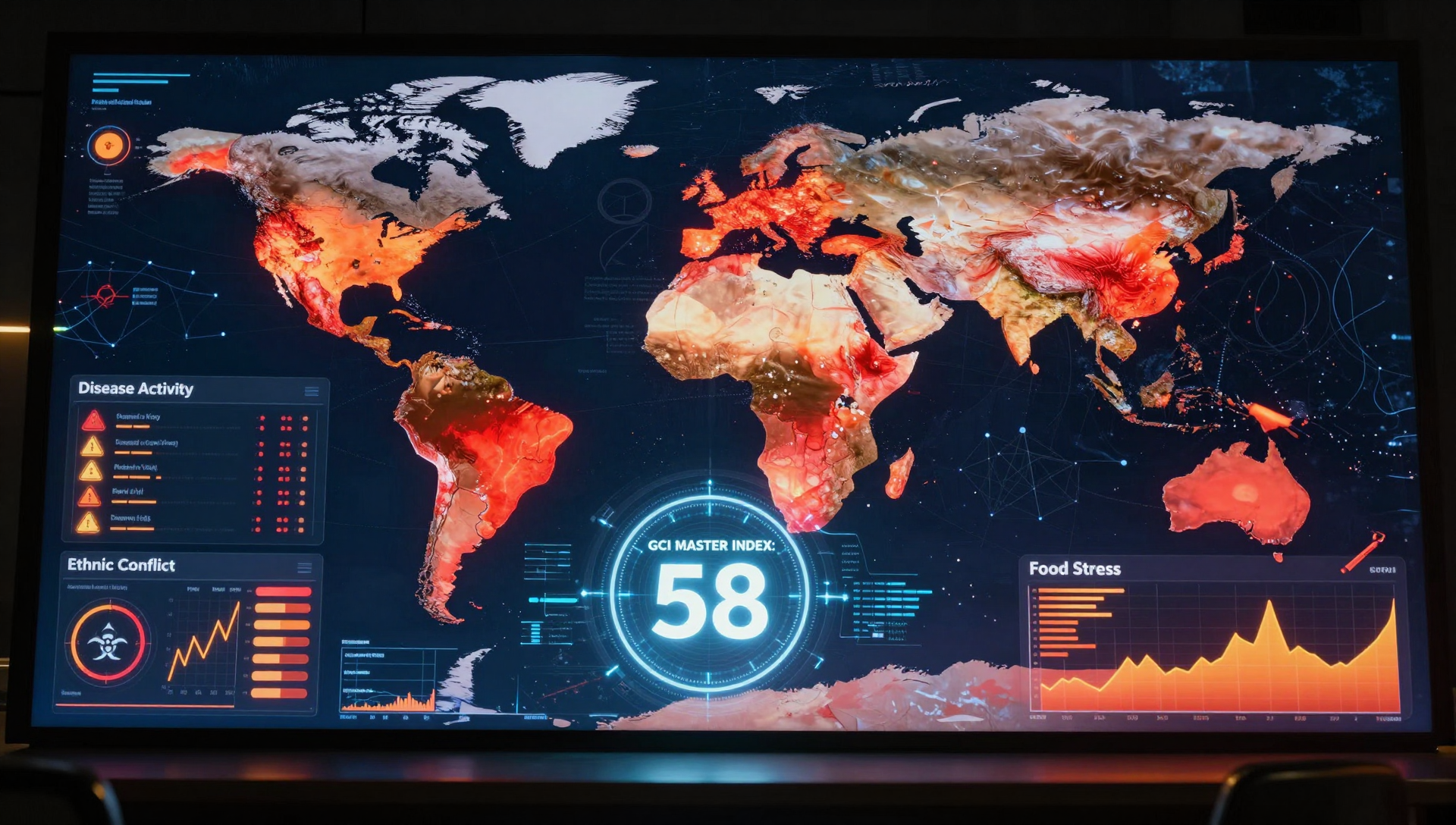
As of May 12, 2026, the global risk landscape is characterized by high-intensity stressors in disease activity and geopolitical conflict. The Watchman Master Index stands at 60/100 (Elevated) , driven primarily by critical health emergencies and deteriorating diplomatic relations in the Middle East.Key findings include:
- Critical Disease Activity: A score of 80.0 reflects significant hantavirus outbreaks linked to maritime travel and localized salmonella cases in the United States.
- Geopolitical Fragility: Negotiations between the United States and Iran have reached a near-collapse state, with the U.S. administration describing the current ceasefire as being on “massive life support.”
- Economic & Supply Chain Disruptions: Conflict in the Middle East is beginning to manifest in niche industrial sectors, notably affecting chemical and ink supplies for global manufacturing.
- Environmental Intersection: Elevated weather severity (65.9) and food stress (65.5) are converging, as atmospheric events increasingly compress global agricultural output.
Primary Risk Drivers
The following table outlines the current primary drivers of global instability according to GCI telemetry:| Driver | Score | Status | Trend || —— | —— | —— | —— || Disease Activity | 80.0 | Critical | Δ — Unchanged || Ethnic Conflict | 76.3 | Pang State | Δ — Unchanged || Rumors of War | 70.0 | Elevated | Δ — Unchanged || Weather Severity | 65.9 | Elevated | Δ ▲ +2.9 || Food Stress | 65.5 | Elevated | Δ — Unchanged |
Sector Analysis
1. War and Conflict
The geopolitical situation is dominated by the escalating tension between the United States and Iran, alongside ongoing regional instability.
- Iran-US Relations: President Trump has characterized Iran’s latest response to peace terms as “totally unacceptable.” Verified reports indicate the ceasefire is currently on “massive life support.” Inside Iran, civilians and activists report that the threat of war is intensifying the trauma associated with domestic repression.
- Maritime Security: The UK and France are scheduled to host a defense ministers’ meeting specifically focused on the Strait of Hormuz, indicating heightened concern over energy transit security.
- Ukraine: Ongoing monitoring continues via WHO and ReliefWeb, with recent “Lessons Learned” reports and newsletters focusing on emergency appeals and health impacts within the region.
- Displacement: Significant returnee activity has been documented in Afghanistan, with individuals returning from Pakistan and Iran between May 3 and May 9, 2026.
2. Disease Activity and Health Emergencies
This sector represents the highest risk score (80.0) due to active viral transmissions and public health warnings.
- Hantavirus Outbreak: A cruise ship has been identified as a vector for hantavirus. Passengers have been transported to a UK isolation facility, and the CDC is coordinating the repatriation of 17 American citizens from the affected vessel.
- Salmonella: The CDC has issued a formal warning to parents following a cluster of salmonella cases linked to contact with pet chameleons.
3. Food and Economic Stress
Market and supply chain indicators show a direct correlation between conflict and consumer-level impacts.
- FAO Food Price Index: The index sits at 130.7, significantly above the 108.0 baseline (2014-16=100).
- Supply Chain Impacts: In a notable real-world example, a Japanese snack giant has transitioned to black and white packaging. This move was necessitated by ink supply shortages directly resulting from the war in Iran.
- Market Volatility: The CBOE VIX remains relatively stable at 18.08, slightly below the historical baseline of 19.5, despite elevated geopolitical tensions.
4. Weather, Seismic, and Humanitarian Impact
Environmental stressors are contributing to regional humanitarian crises.
- US Weather Severity: NOAA has 364 active alerts. Notable events include “Extreme Heat” warnings for the Coachella Valley and San Diego County deserts, contrasted with “Freeze Watches” in the Northwest Pocahontas and Southeast Randolph regions.
- Seismic/Volcanic Activity: 13 M4.5+ earthquake events were recorded in a 24-hour period, aligning with historical baselines. An “Orange” alert is active for a volcano in Indonesia.
- Agricultural Drought: GDACS reports medium-impact agricultural drought across 453,295 km² covering Angola, the Democratic Republic of Congo, the Republic of Congo, Gabon, and Zambia.
Convergence Delta: Analyst Assessment
Current intelligence suggests three critical intersections of risk:
- War and Humanitarian Intersection: Active military operations in the Middle East and Eastern Europe are generating high volumes of civilian displacement and increasing the burden on international aid organizations like the WFP and WHO.
- Atmospheric-Agricultural Compression: The intersection of weather severity and food stress indicators suggests that extreme atmospheric events (heat and freeze alerts) are actively compressing agricultural output, maintaining the high FAO price index.
- Dual-Vector Stress: Disease Activity and Ethnic Conflict are both in a “Pang State” (scores ≥72.5). While this remains below the threshold for “Active Convergence,” the simultaneity of these stressors suggests that state capacities to manage health crises may be compromised by internal security concerns.
Emerging Risks
- Resource Scarcity: The transition of commercial entities to austere packaging (black and white) indicates that chemical and pigment supply chains are highly vulnerable to Middle Eastern conflict.
- Health Quarantine Logistics: The movement of passengers from hantavirus-hit vessels to isolation facilities in the UK and US highlights a potential strain on specialized quarantine infrastructure if maritime outbreaks expand.