Executive Summary
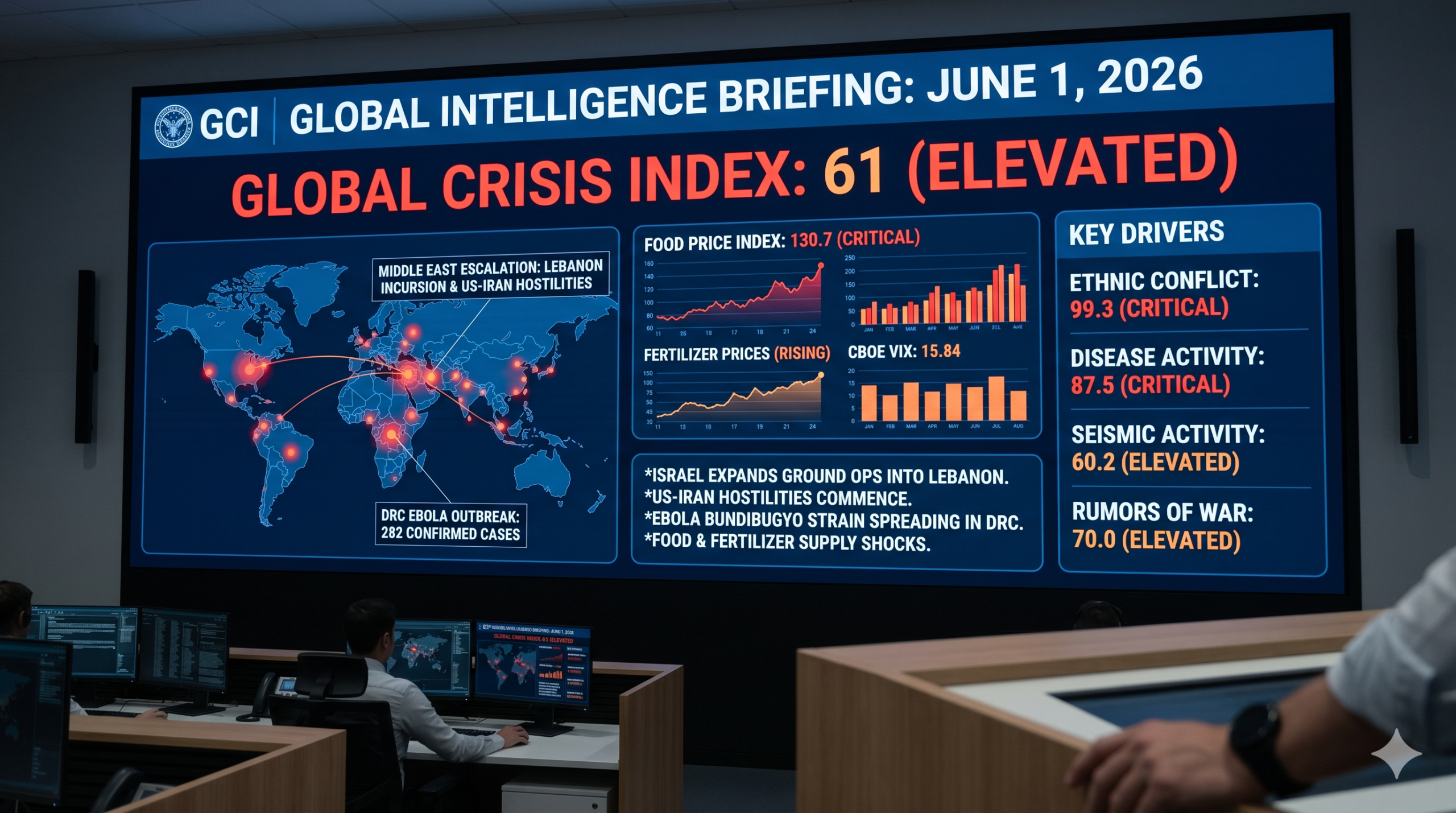
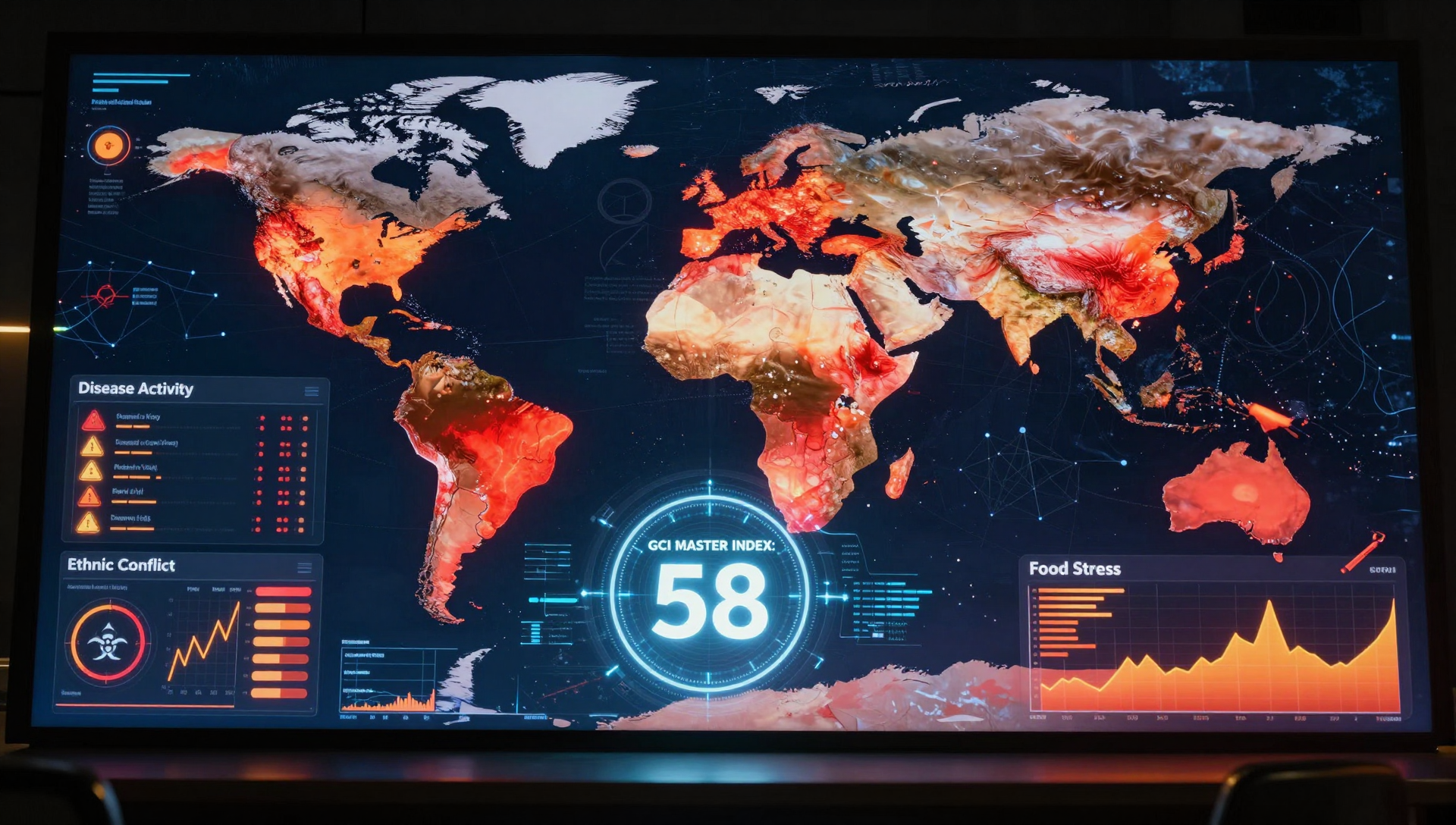
As of May 30, 2026, the GCI Master Index Report stands at 58, indicating that the global system remains within its historical equilibrium range. While the overall system has not yet reached a “birth pang” convergence pattern, significant stress is localized within three primary drivers: Ethnic Conflict (99.3), Disease (87.5), and Food (65.5).
The most critical escalation is observed in Disease Activity, which is currently rated at a Critical level due to outbreaks of Ebola in Central Africa and leaked data revealing suppressed diphtheria surges in Australia. Concurrently, War and Conflict remain in a state of high-tension monitoring, characterized by a lack of resolution in U.S.-Iran negotiations and a projected escalation in the Ukraine-Russia theater. While resource stress is elevated—driven by a spike in the FAO Food Price Index to 130.7—the primary channels of global instability are currently operating in isolated domains without confirmed cross-category amplification.
Technical System Metrics
The following points summarize the primary intelligence indicators as of the May 30, 2026, reporting cycle:
- Ethnic Conflict: Pang State (Current Score: 99.3; Historical Baseline: N/A)
- Disease Activity: Critical (Current Score: 87.5; Historical Baseline: N/A)
- Food Stress: Elevated (Current Score: 65.5; Historical Baseline: 108.0; Price Index: 130.7)
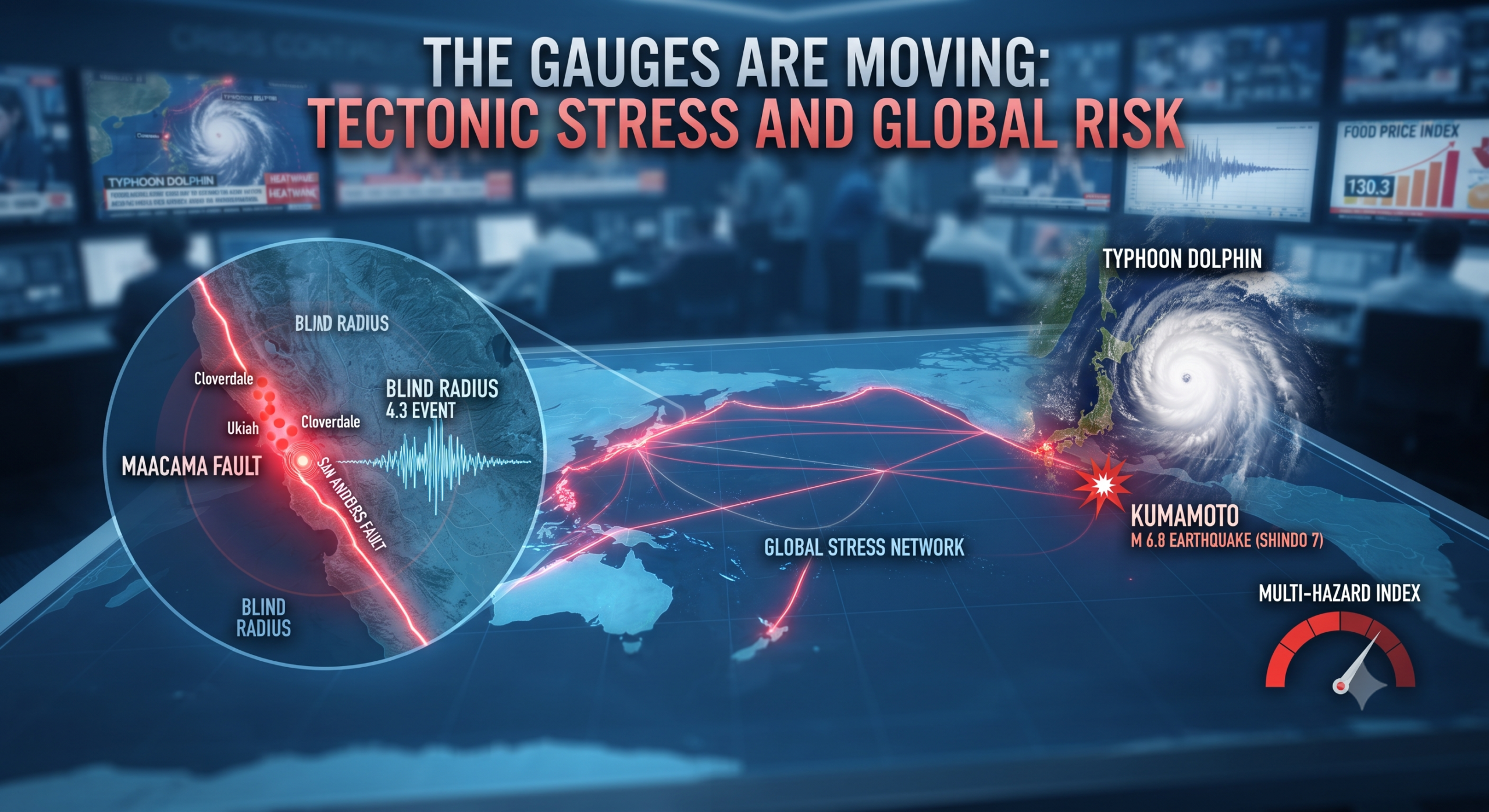
- Seismic Activity: Monitoring (Current Score: 49.3; Historical Baseline: 13.2 events/day; Current: 13)
- Economic Stress: Monitoring (Current Score: 42.6; Historical Baseline: 19.5; VIX: 15.32)
- Weather Severity: Stable (Current Score: 36.8; 180 Active US Alerts)
- Humanitarian Impact: Stable (Current Score: 21.5; 20 Active GDACS Events)
Detailed Analysis of Primary Drivers
1. War and Geopolitical Conflict
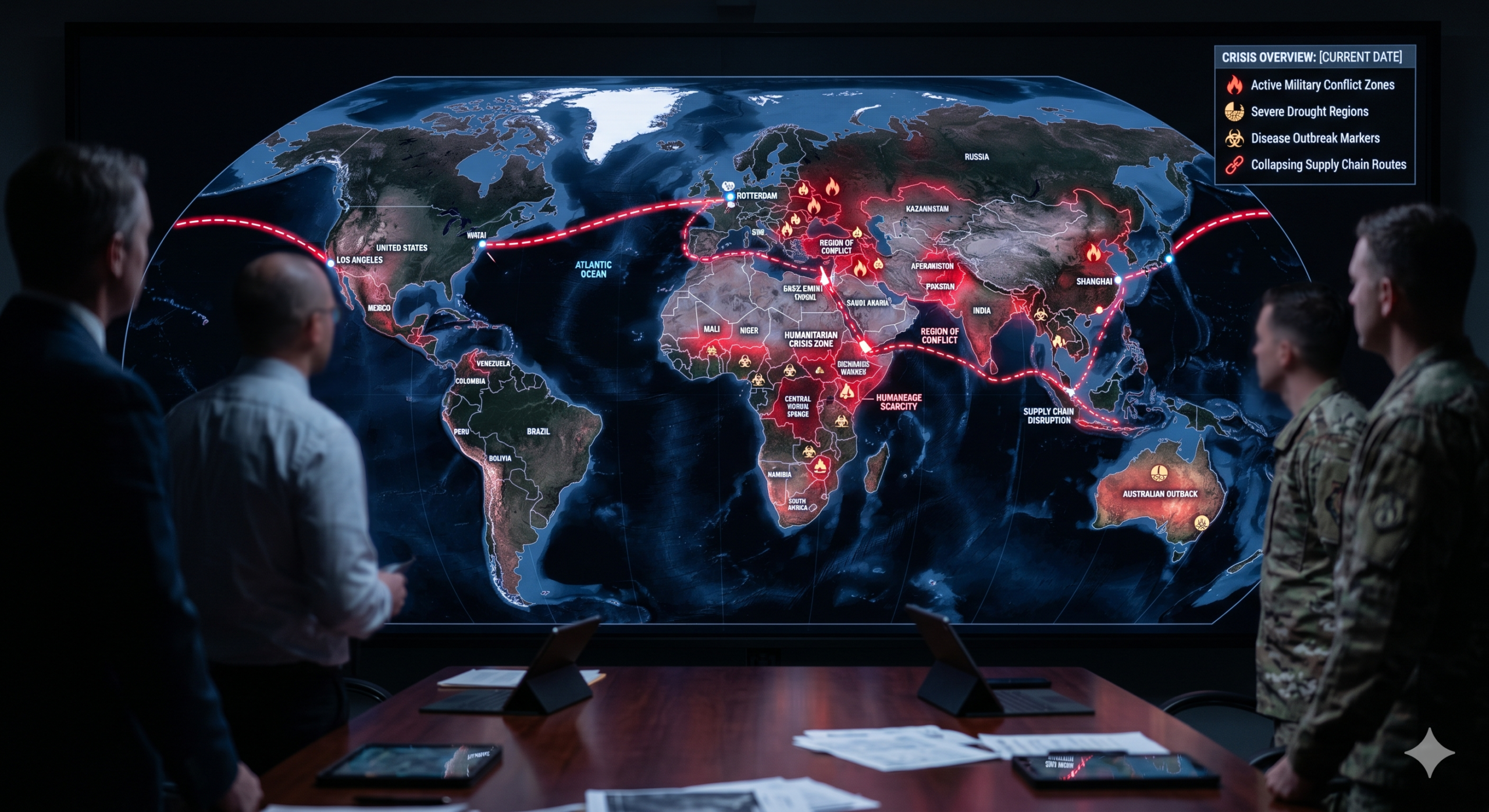
The geopolitical landscape is defined by stalemates and the rejection of diplomatic resolutions in multiple theaters.
- Iran and the Middle East: Despite international pressure, Iran has stated that no final agreement has been reached with the U.S. regarding the “Iran Deal.” Iranian officials continue to emphasize their “right to manage” the Strait of Hormuz and have rejected external pressure for a ceasefire. Intelligence suggests an “Iran Deal” deception may be in play.
- Gaza Strip: Prime Minister Netanyahu has reportedly directed the IDF to increase control of Gaza to 70%, signaling a significant expansion of military presence.
- Ukraine-Russia Theater: The conflict is characterized by a stalemate, though Russian leadership appears poised to escalate. Ukraine is increasingly utilizing AI-driven drones to target vital Russian supply convoys.
2. Disease Activity and Public Health
Disease activity has reached a Critical threshold (87.5), driven by both active outbreaks and transparency failures in health reporting.
- Ebola Outbreak: A Bundibugyo virus disease outbreak has been confirmed in the Democratic Republic of the Congo and Uganda. Legal hurdles complicate mitigation, including a Kenyan court blocking a U.S. plan to establish an Ebola quarantine center.
- Diphtheria Transparency Issues: Leaked data from Australia’s Northern Territory reveals that diphtheria cases surged a full month before an official alert was issued to the public.
3. Food and Resource Stress
Food stress is currently Elevated at 65.5, primarily due to pricing volatility rather than immediate supply blockades.
- FAO Food Price Index: The index has spiked to 130.7, a significant increase from the baseline of 108.0.
- Agricultural Drought: Humanitarian monitoring indicates “Orange” level alerts for agricultural drought across Southern and Central Africa, including Angola, DRC, Gabon, Zambia, and Madagascar.
Secondary Environmental and Economic Factors
Seismic activity remains at a baseline level with 13 events of M4.5+ recorded in the last 24 hours. In the United States, weather severity is marked by flash flood warnings in Kentucky and wildfires in Los Angeles. Economic stress remains low, with the VIX at 15.32, suggesting that market fear has not yet reacted to current geopolitical and biological risks.
Convergence Delta and System Conclusions
The May 30, 2026, cycle demonstrates a “Pang State” (scores ≥ 72.5) in two specific vectors: Ethnic Conflict and Disease. While these dual-vector stresses are high, the GCI system confirms that these channels are currently operating in isolated domains. There is no confirmed cross-category amplification. The Master Index of 58 confirms the global system is currently maintaining a state of equilibrium, though the critical levels of disease and high ethnic conflict scores require constant monitoring.
I’m Wayne – and that’s our world today!