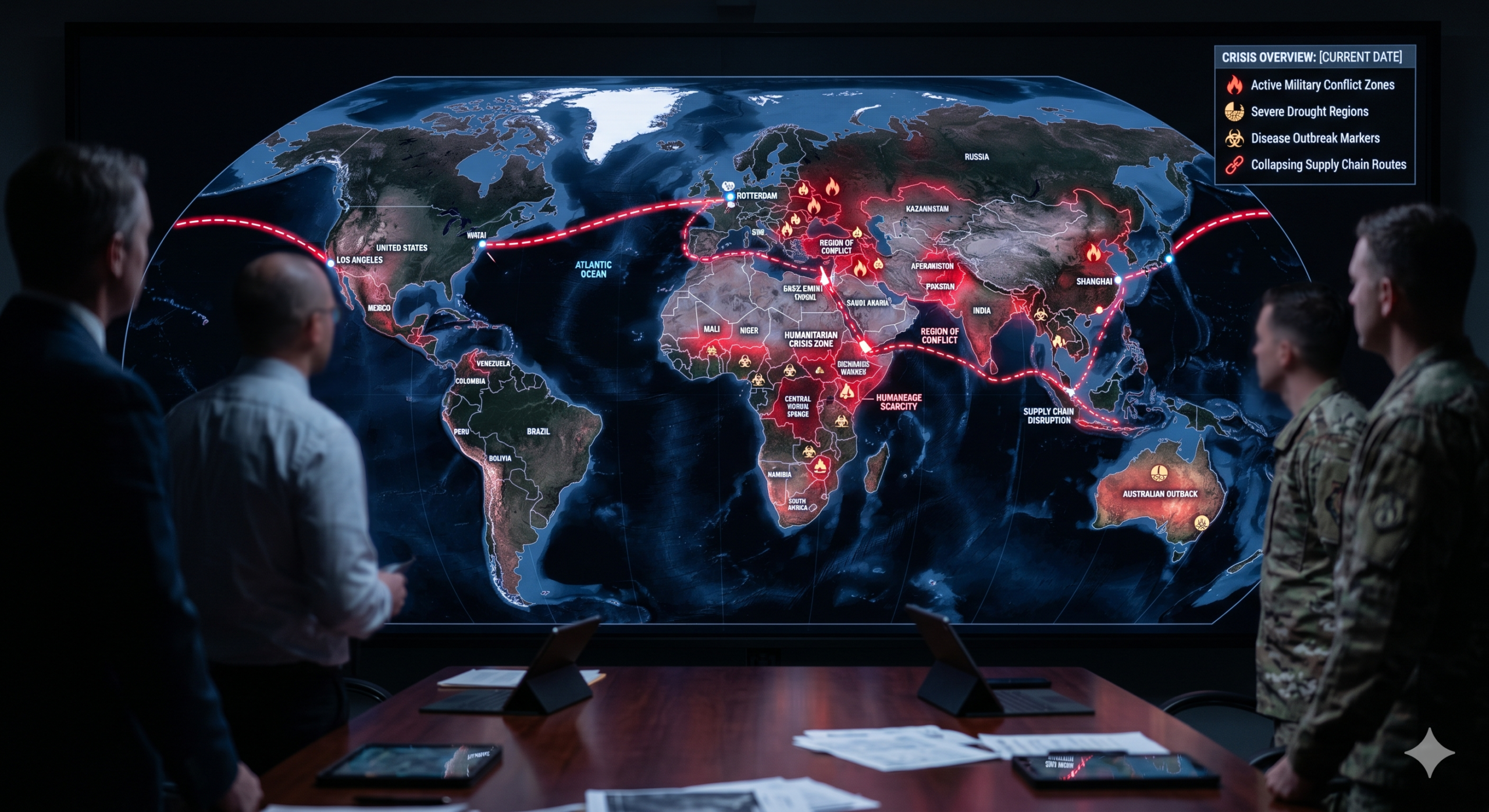
World at the Boiling Point is no longer just a dramatic headline—it accurately describes the global conditions outlined in the May 2026 Global Crisis Index Intelligence Briefing. From Ebola outbreaks in Central Africa to rising tensions involving Iran and Israel, the world is entering a period of synchronized instability across disease activity, conflict zones, climate stress, and food security.
The “No-Vaccine” Threat: Ebola Returns with a Vengeance
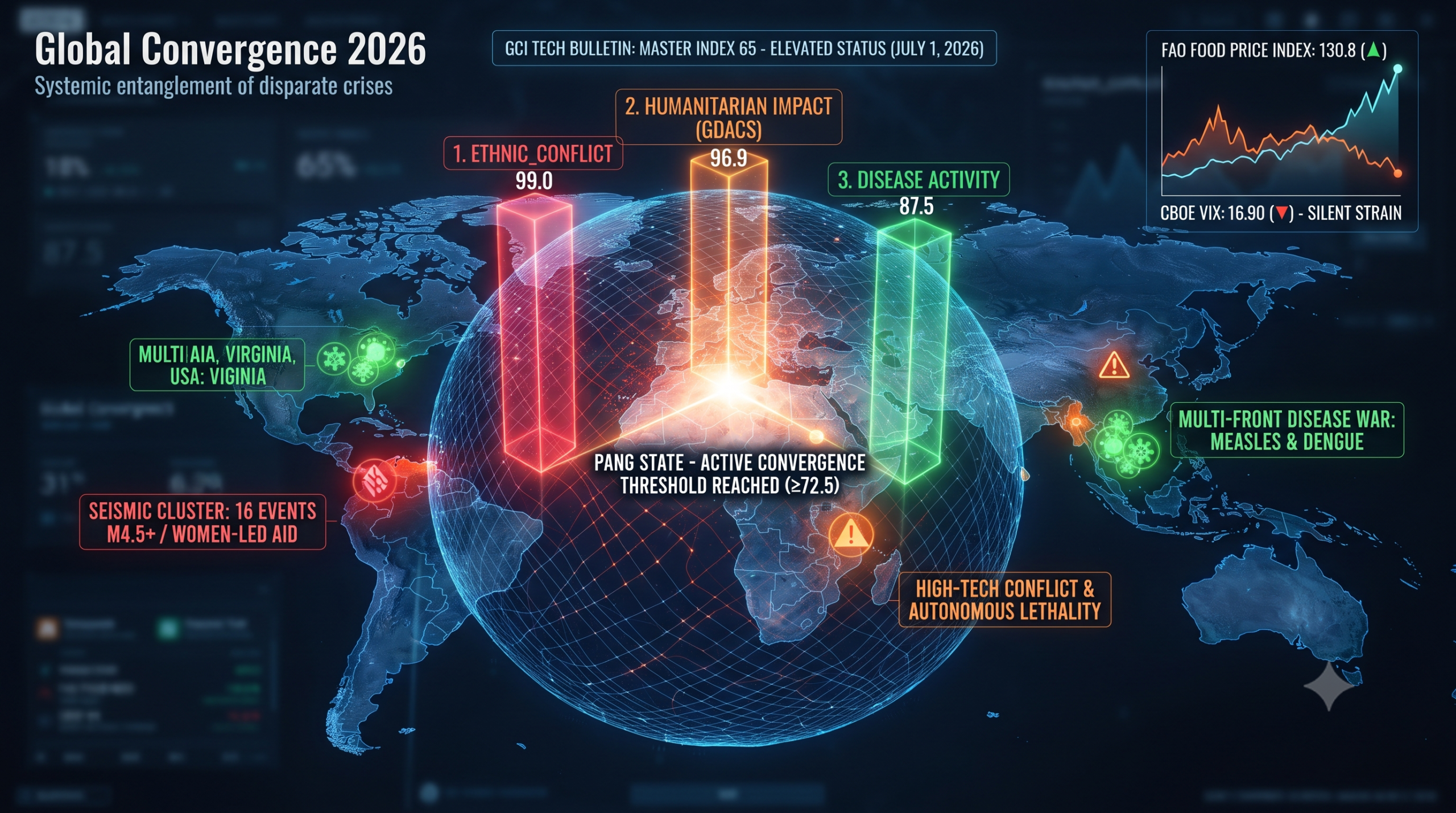
The most immediate threat to systemic health security is the “Critical” rating of 87.5 for Disease Activity. The World Health Organization (WHO) has formally declared a Public Health Emergency of International Concern (PHEIC) regarding an Ebola outbreak in the Democratic Republic of the Congo (DRC) and Uganda. This escalation is driven by the Bundibugyo virus, a rare strain for which there is currently no viable vaccine, complicating containment efforts significantly.According to a ReliefWeb emergency report:”DR Congo: IRC launches emergency response as rare Ebola strain with no vaccine spreads across eastern DRC and Uganda.”This regional crisis is the primary catalyst for the critical disease rating, but it is not the only signal of health infrastructure strain. Canada has confirmed its first case of Hantavirus, a development that functions as a systemic stress test. While the WHO maintains a “low risk” evaluation for Hantavirus globally, the emergence of unrelated pathogens suggests that global health monitoring networks are being stretched dangerously thin.
The “Clock is Ticking”: Geopolitical Brinkmanship in Iran
Geopolitical tensions have pushed the “War & Conflict” channel into a state of high-intensity monitoring. Intelligence indicates a rapid escalation in the Middle East, with reports suggesting that the United States and Israel are preparing for possible new strikes on Iran as early as next week. This brinkmanship is occurring against a grim domestic backdrop in the region; since the onset of the conflict, there has been a reported surge in political executions within Iran, signaling a hardening of the regime’s internal posture.The urgency of the situation was underscored by Donald Trump regarding the lack of progress in diplomatic channels:”The clock is ticking for Iran as the deal to end the war remains elusive.”With Hezbollah evolving its drone tactics and the frontlines in Ukraine transformed by the deployment of next-generation weaponry, the risk of a regional “kill-zone” expanding into a broader systemic conflict remains the primary geopolitical concern.
The “Pang State” Convergence: When Crises Collide
The May 2026 report highlights a “Convergence Delta,” a counter-intuitive state where disparate crisis channels intersect to amplify total systemic risk. The source intelligence confirms that three specific channels— Disease, Humanitarian Impact, and War —are now intersecting. This intersection creates a “Pang State” environment, where the traditional “siloed” approach to crisis management fails because the drivers are no longer independent.The report identifies a “compression” effect within this convergence:
- Military-Humanitarian Compression: Active military operations, particularly in Cabo Delgado (Mozambique) and South Sudan, are directly driving massive civilian displacement, rendering traditional humanitarian aid corridors inaccessible.
- Climate-Agricultural Compression: Atmospheric events are actively compressing agricultural output. ORANGE drought alerts are currently active across Angola, the Democratic Republic of Congo, the Republic of Congo, Gabon, Zambia, Argentina, and Uruguay.
- Policy Compression: The physical environment (Weather) is now limiting the policy options available for conflict resolution. As droughts diminish resources, the competition for arable land and water exacerbates existing ethnic and military tensions.
Complacent Markets vs. Physical Realities: The 130.7 Food Stress Spike
While the biological and military threats dominate the headlines, macroeconomic indicators suggest a dangerous de-coupling of market volatility from physical supply chain realities. The CBOE Volatility Index (VIX) currently stands at 18.97 , which is 1.1 below its historical baseline . This suggests a level of market complacency that is inconsistent with the “Critical” ratings in physical sectors.The primary drivers of the current crisis are physical rather than financial, as evidenced by the FAO Food Price Index spiking to 130.7 (against a 108.0 baseline). This surge is the direct result of “atmospheric events” and supply blockades. The delta between the low VIX and the high FAO index indicates that while investors may be pricing in a “business as usual” scenario, the ground-level reality is one of extreme food stress and resource scarcity. The system is experiencing a “physical-to-financial” lag that often precedes sharp market corrections.
Conclusion: Navigating the Intersection
The May 2026 GCI Tech Bulletin depicts a world struggling under the weight of simultaneous, high-intensity shocks. The convergence of a vaccine-resistant Ebola strain, high-stakes military preparations in Iran, and widespread agricultural droughts has created a “Pang State” environment that defies single-sector solutions.As these channels continue to intersect, we must ask: Are our global systems prepared for “Pang State” events where humanitarian, biological, and military crises reach critical mass simultaneously? In this era of elevated and synchronized risk, the reliance on verified intelligence is no longer a strategic advantage—it is the only tool for survival in a world at the boiling point.