Executive Summary
This Global Crisis Intelligence Briefing shows that the structural scaffolding holding the international order together is facing its most acute fracture since the dawn of the Cold War. As geopolitical polarization deepens into direct military friction, the institutional guardrails meant to prevent systemic collapse are giving way to raw power dynamics and kinetic proxy conflicts.
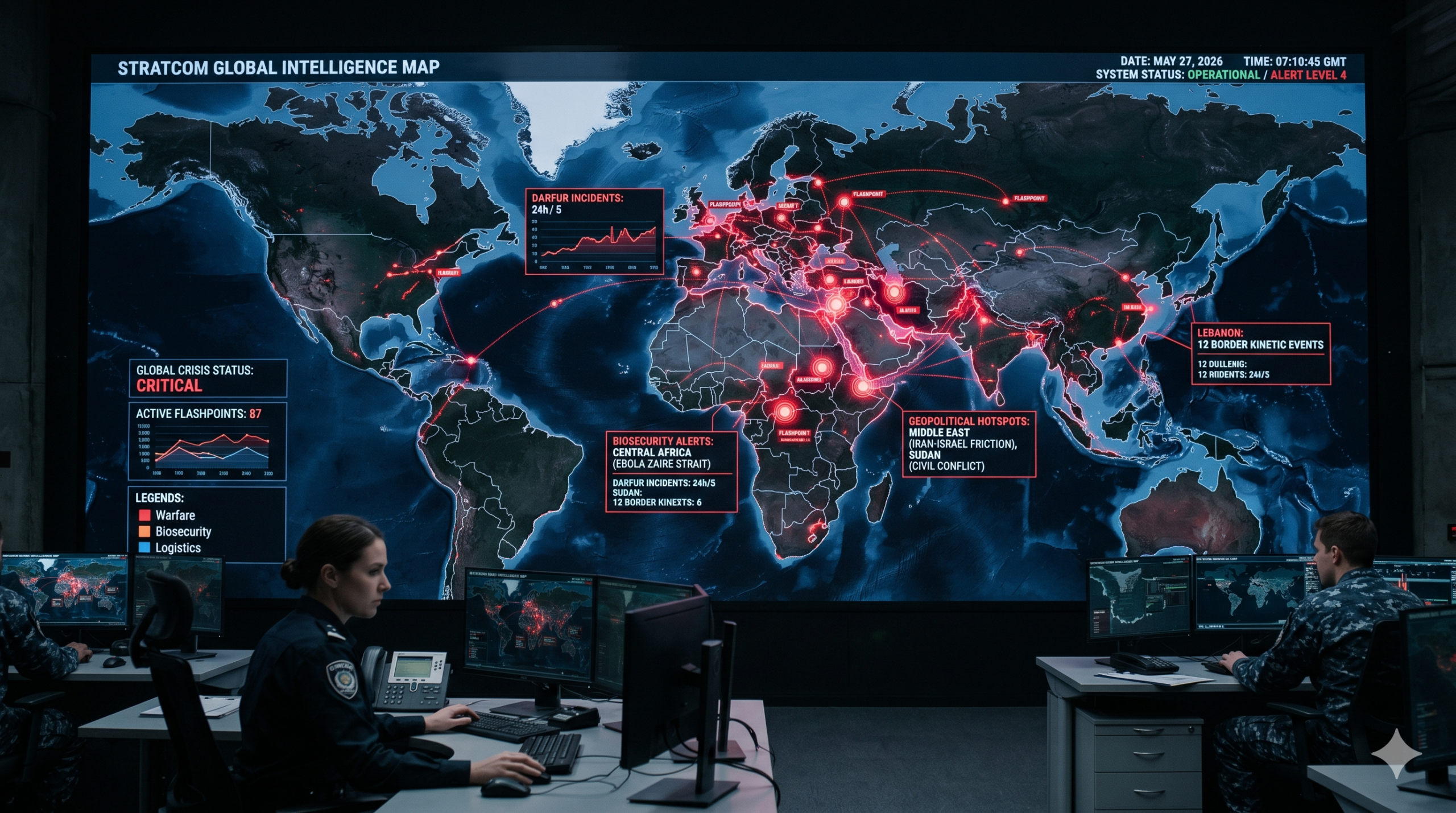
As of May 27, 2026, the Global Crisis Index (GCI) Master Index stands at 63, indicating an Elevated state of global risk. While the index remains below the threshold for “Active Convergence,” several critical vectors—most notably Ethnic Conflict (99.3) and Disease Activity (80.0)—are currently in a “Pang State,” signaling extreme localized stress.
The primary drivers of current global instability are a critical Ebola resurgence in Central Africa, escalating military tensions between the United States and Iran, and significant food price inflation. Intelligence suggests a “Convergence Delta” where active conflict corridors in the Middle East and Ukraine are beginning to intersect with grain supply disruptions, further compressing agricultural output and driving energy costs higher for millions.
Crisis Indicator Dashboard
🚨 Critical / Pang State
- Ethnic Conflict (Score: 99.3): Driven by persistent, high-level ethnic tensions boiling over globally.
- Disease Activity (Score: 80.0): Fueled by active Ebola outbreaks in the DRC, Uganda, and South Sudan, alongside severe Measles outbreaks in Bangladesh.
⚠️ Elevated Risks
- Seismic Activity (Score: 67.6): Marked by a major surge in activity with 18 events ($M \ge 4.5$) recorded within a single 24-hour window, putting it 36% above the historical baseline.
- Weather Severity (Score: 67.0): Exacerbated by the return of El Niño driving extreme heat and drought globally, alongside devastating flash flooding in the United States.
- Food Stress (Score: 65.5): Triggered by the FAO Index soaring to 130.7, worsened by supply blockades and ongoing deep food insecurity in Afghanistan and Pakistan.
🔍 Monitoring Status
- War & Conflict (Score: 50.0): Tempered by ongoing Ukraine mediation efforts, but heavily pressured by recent Iran-US strikes and escalating tensions in the Strait of Hormuz.
- Economic Stress (Score: 45.5): Market volatility remains relatively calm, with the VIX sitting at 16.94, comfortably below its historical baseline.
🟢 Stable Status
- Humanitarian Impact (Score: 29.4): Ongoing agricultural droughts in Central Africa and Madagascar require close observation but remain stable relative to other cascading channels.
Primary Crisis Themes
1. Disease Activity and Public Health Emergencies
Disease activity represents the most acute threat to stability, currently holding a “Critical” rating of 80.0.
- Ebola Outbreak (Central Africa): A multi-country threat is actively emerging. Reports indicate healthcare systems are buckling as workers struggle to contain outbreaks in the Democratic Republic of the Congo (DRC) and Uganda. Preparedness efforts are also underway in South Sudan, with Goma (DRC) hardening as a focal point for intense clinical intervention.
- Measles Resurgence (Bangladesh): Described as an unfolding public health crisis, Bangladesh is experiencing a significant, rapid resurgence of the virus.
- Diphtheria (Czech Republic): The Czech Republic recorded its first diphtheria death since 1969, signaling a stark breakdown in traditional immunization outcomes within Europe.
2. War and Geopolitical Conflict
While the overall War & Conflict channel sits at a baseline monitoring level (50.0), specific regional flashpoints are applying massive downstream economic and humanitarian pressure.
- Iran-US Escalation: Iran has officially condemned recent US military strikes as a “gross violation” of an active ceasefire, occurring even while delicate peace talks were in progress.
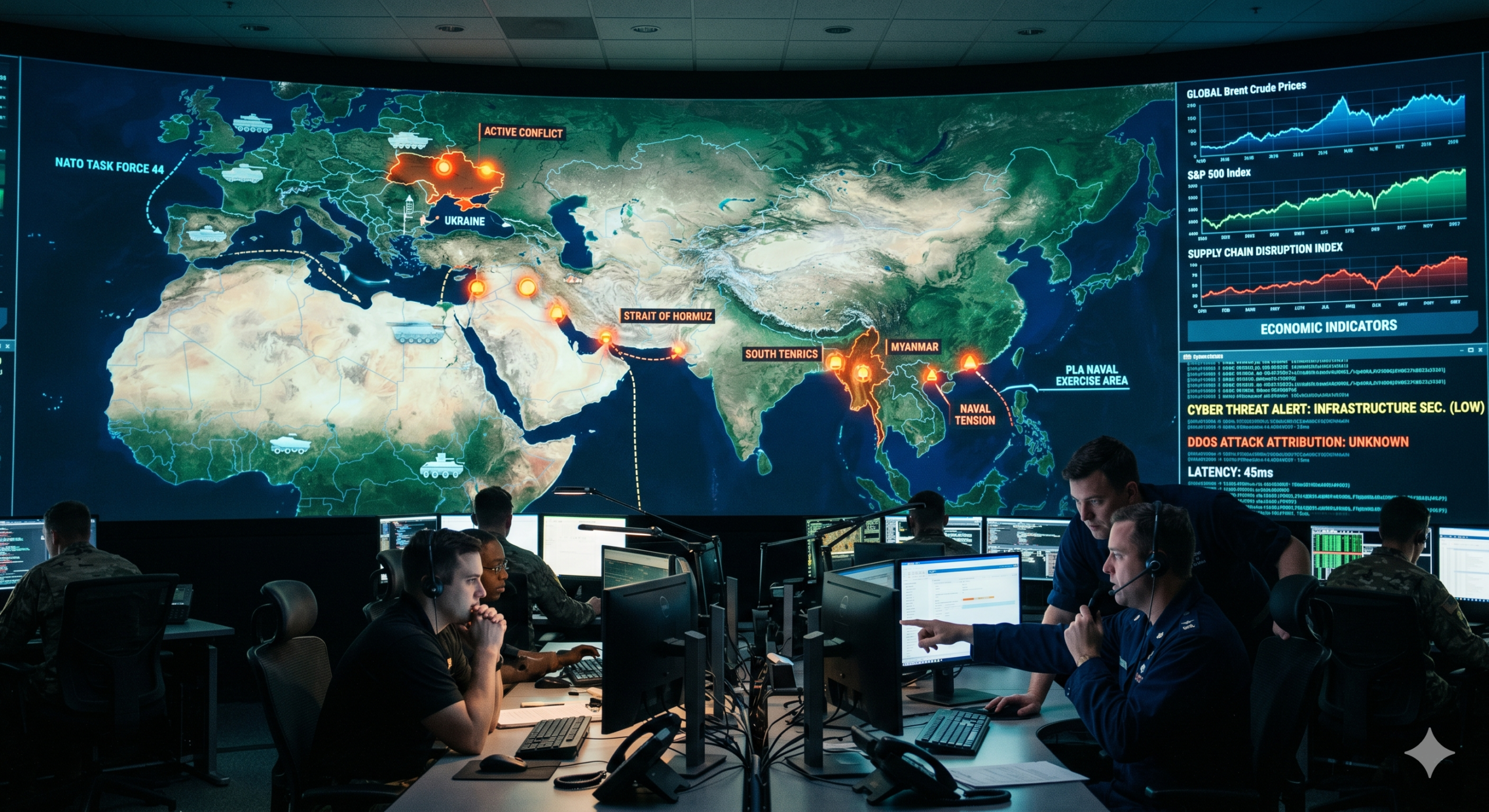
- Strategic Maritime Risks: Intelligence discussions regarding Iranian control of the strategic Strait of Hormuz have intensified, with international planners warning that an energy chokehold there would be a fatal strategic error. Global energy bills are already projected to rise as a direct consequence.
- Ukraine Conflict: Diplomatic mediation efforts continue behind the scenes as the EU actively seeks a viable “Russia whisperer” to negotiate an end to the protracted war.
- Localized Violence: In the United States, a grocery store shooting resulting in the death of a shopper and the injury of a 16-year-old employee highlights persistent, volatile domestic security concerns.
3. Food Security and Agricultural Stress
The toxic intersection of severe weather anomalies and active combat zones is placing unprecedented pressure on modern global food networks.
- Price Spikes: The FAO Food Price Index has surged to 130.7, drastically outstripping the historical baseline of 108.0.
- Regional Insecurity:
- Afghanistan: Intelligence updates show critical food insecurity and rapidly spiking grain prices throughout May 2026.
- Pakistan: While the localized Benazir Nashonuma Programme is showing positive structural results in preventing acute malnutrition, macroeconomic market reports continue to indicate immense systematic stress.
- Climatic Drivers: The verified return of El Niño is raising international panic over extreme heat and prolonged droughts, which are projected to further compress baseline agricultural output over the next two quarters.
4. Environmental and Seismic Activity
Both seismic and weather-related events are tracking at “Elevated” levels, significantly buoying the Master Index score.
- Seismic Instability: The USGS recorded 18 independent events of M4.5+ in a single 24-hour period, compared to a standard historical baseline of 13.2 per day.
- Weather Severity:
- United States: NOAA has issued 369 active weather alerts, featuring severe destructive thunderstorm warnings in Texas and high-impact flash flood warnings in West Virginia.
- Central Asia: Kyrgyzstan is reporting destructive mudflows and sudden flash floods heavily impacting the Jalal-Abad and Osh regions.
- Widespread Drought: Large-scale agricultural droughts are currently choking approximately 272,473 km² in Central Africa (spanning Angola, the DRC, and Zambia) and an additional 223,673 km² across Madagascar.
Convergence Delta and Strategic Outlook
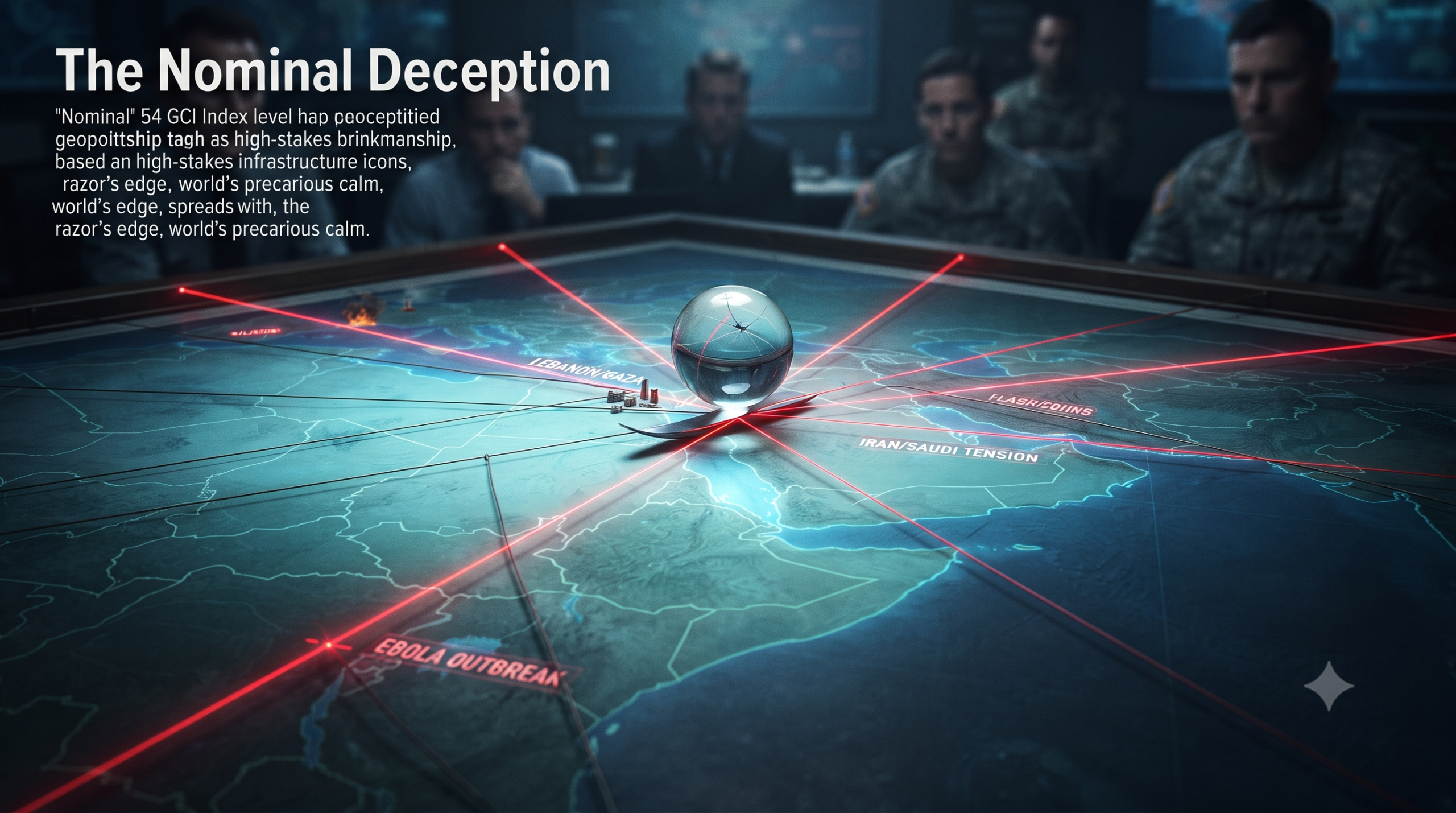
Intelligence analysis identifies two critical “Convergence Deltas” where individual risk vectors are overlapping to create compounding, non-linear crises:
- The Conflict-Food Intersection: Active conflict corridors are currently directly overlapping with vital global grain supply chains. This “multi-vector activity” suggests that traditional humanitarian aid lines may be intentionally or collaterally blocked by military operations, triggering manufactured food shortages.
- Ethnic Conflict and Disease: Both indicators are simultaneously registering in the “Pang State” (scores $\ge 72.5$). This creates a dual-vector stress environment where deep social fragmentation, civil distrust, and regional instability may fundamentally hinder emergency medical distribution and field responses to the Ebola and Measles outbreaks.
Conclusion: The Master Index of 63 profiles a global landscape under extreme, systemic tension. While the 3-channel simultaneous “Pang State” required to trigger a full-scale convergence event hasn’t yet materialized, the current distribution of verified crises across five of the eight monitoring categories points toward a prolonged period of broad, multi-vector global instability.
I’m Wayne – and that’s our world today!
Hey! Where was the grocery store shooting?
I think this is the one you are refering to. Norfolk, Virginia, on May 23, 2026.
In that incident, a 45-year-old woman, identified as Meghnaben Patel, was working at a convenience store when she was shot and killed by an armed individual. Reports indicated that the suspect had been involved in an earlier domestic dispute elsewhere in the city before arriving at the store. While this event involved a store clerk, other recent incidents across the U.S. have also involved shootings in retail environments, often stemming from personal disputes, arguments, or isolated acts of violence rather than random attacks.
Thanks for the comment John. This has been a fun project to work on. Hope you are well sir.