Introduction: The Rhythm Beneath the Chaos
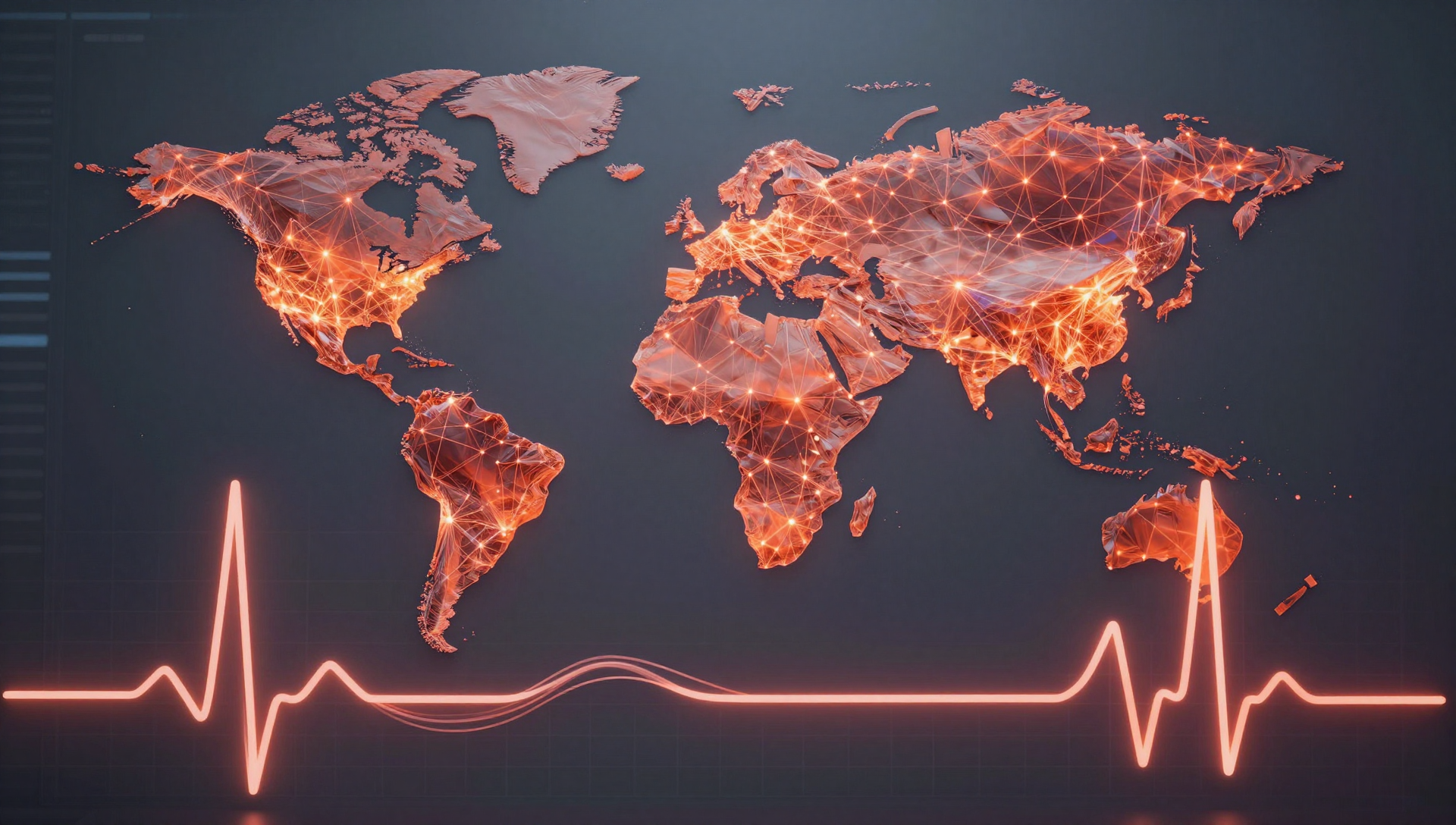
In an era of relentless “permacrisis,” understanding the true pulse of global risk requires that we separate the signal from the noise of a 24-hour news cycle. We perceive global instability as a series of random, jagged shocks, but a deeper longitudinal analysis of the Pang Metric reveals something far more structured. This is not merely a numerical index; it is the pulse of the planet.
When we step back from the daily headlines and observe the data from January 2025 through May 2026, we see that global danger is not an escalating climb, but a rhythmic, architectural process. The world is behaving less like a failing machine and more like a biological organism in the throes of a profound transition. The question is no longer whether the system is breaking, but what it is attempting to birth.
The 11-Day Phenomenon: Why “Total Crisis” is Rarer Than You Think
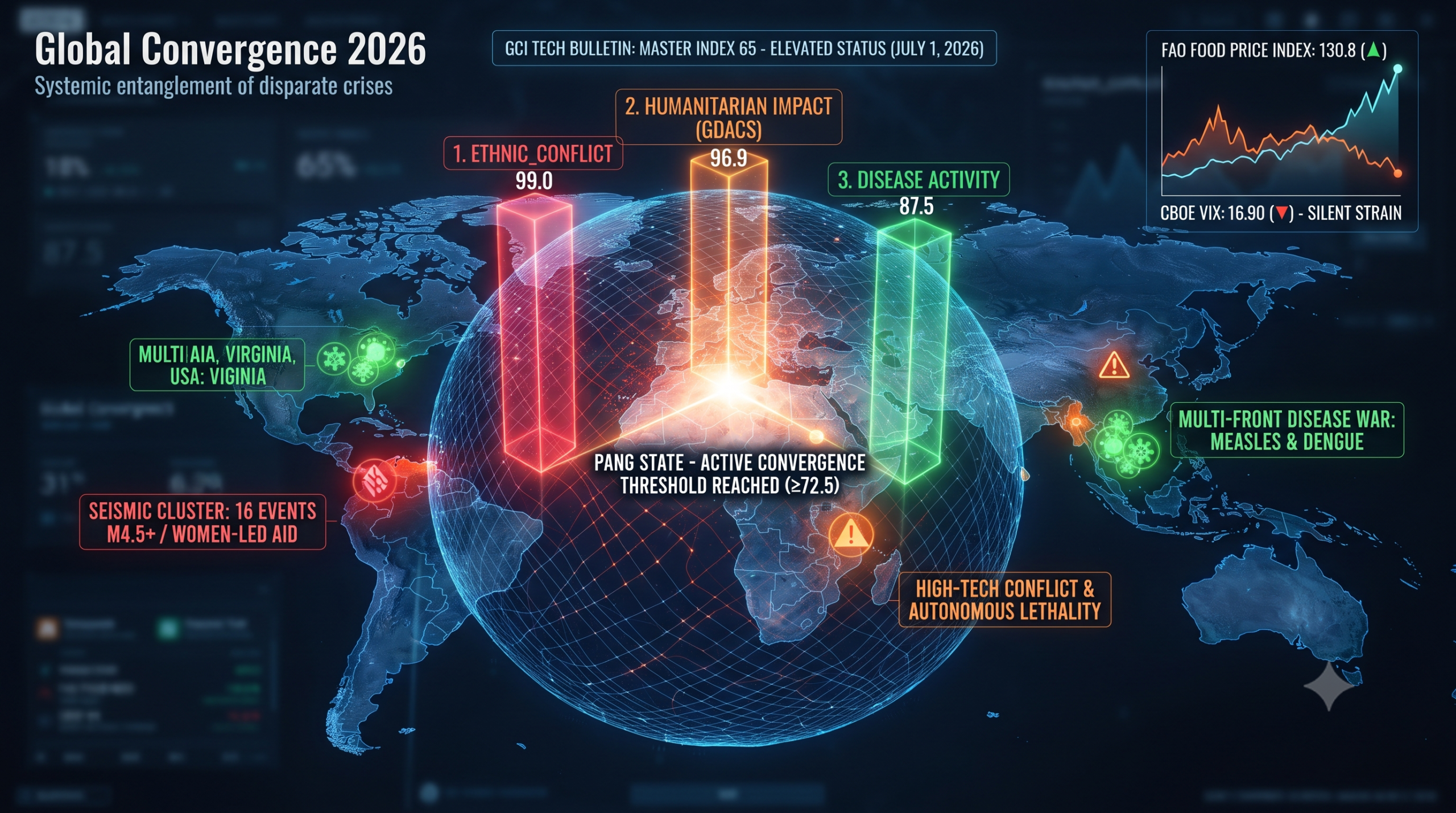
To the casual observer, the world has seemed on the brink of collapse for years. However, the data mandates a more disciplined definition of “total crisis.” In our framework, we identify a Pang State as a rare alignment where the Master Risk exceeds 72.5 while both War and Unrest metrics hit their absolute ceiling of 100 .Over the last 17 months, this perfect storm of systemic failure occurred on only 11 days . These were tightly clustered into two distinct events: five days in January 2025 and six days in March 2026 . This finding is critical: it proves that while “simmering” tension—where war or unrest may be maxed out—is common, the coordinated synchronization of all systems into a Pang State is exceptionally rare. Throughout much of 2025, the Master Risk hovered between 50 and 63; the system lacked the specific coordination required to trigger a full-scale systemic rupture.”The Pang state… occurred on only 11 days across the entire 17-month period. This creates frequent ‘simmering’ tension rather than full crisis.”
The Labor Analogy: Global Risks as “Birth Contractions”
The architectural rhythm of the dataset suggests a biological imperative. These risk spikes function precisely like “Birth Contractions” —intense, coordinated efforts by the global system to move from one state to another.We observe two major systemic contractions in the data:
- The First Contraction: January 2025 (Master Risk 78).
- The Second Contraction: March 2026 (Master Risk peaking at 79 ).Between these two spikes lies a 14-month “refractory period.” Much like a biological system recharging between efforts, the world in 2025 experienced near-misses and elevated baselines, but the system held. The fact that the 2026 contraction reached a higher Master Risk peak than the first suggests a system moving toward a final “delivery” rather than just experiencing random accidents. The pressure is mounting; the contractions are becoming more intense.
The Earth Speaks First: The Seismic Connection
Perhaps the most clinical observation in our analysis is the correlation between human volatility and the physical environment. Pang episodes are not merely social phenomena; they are physically anchored. The data shows that Pang states are always accompanied by high Seismic activity (scoring 60–100).During the January 2025 contraction, Seismic levels hit the maximum of 100 , mirroring the geopolitical and civil ceilings. This suggests that the physical instability of the planet is not a separate variable but a synchronized component of the global pulse. When human systems reach a breaking point, the earth’s physical baseline appears to destabilize in tandem, creating a feedback loop between the crust we walk on and the societies we build.
The 2026 Shift: From Conflict to Survival
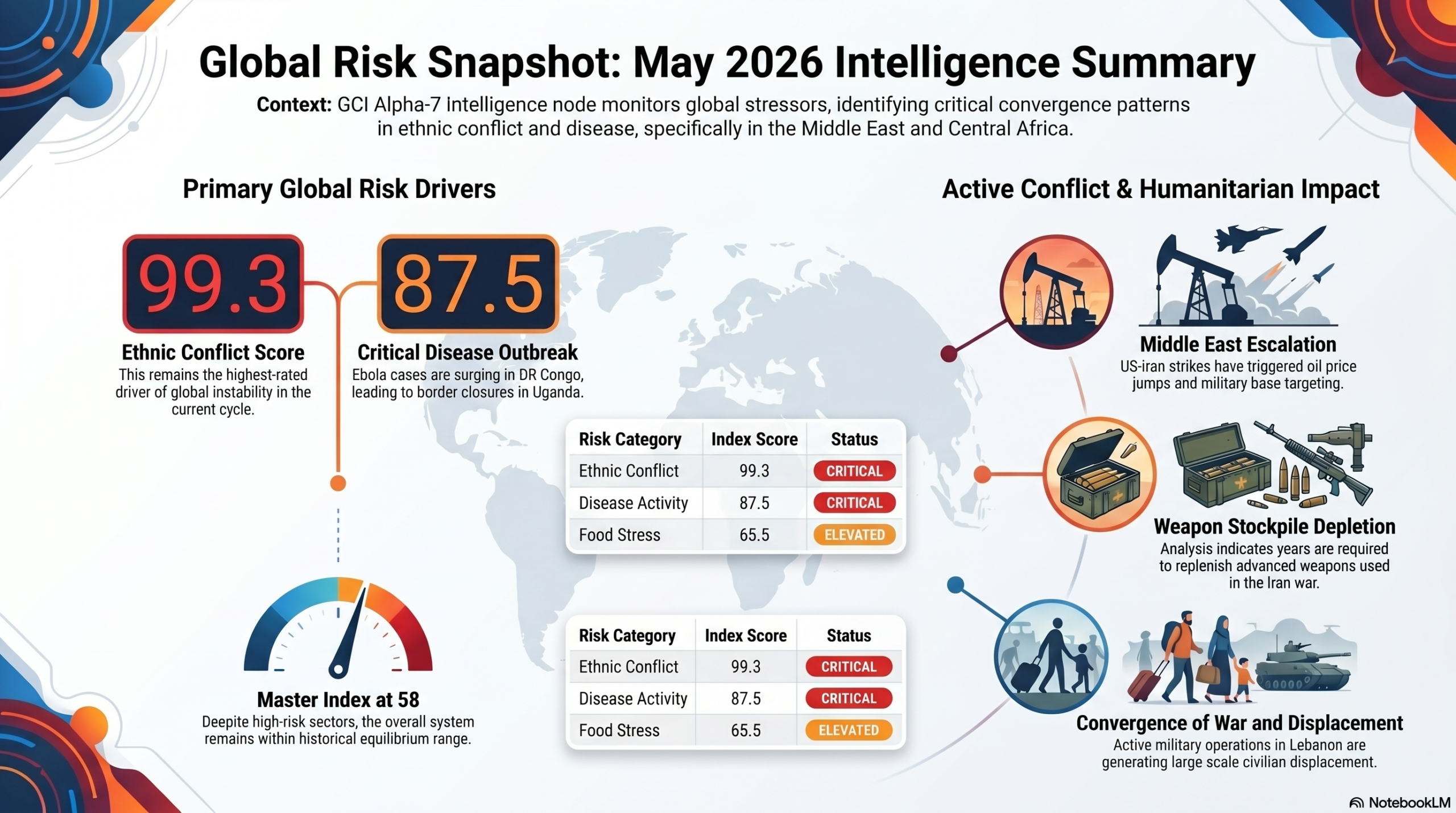
If the March 2026 contraction was the “active labor” of war, the period that followed represents a terrifying new phase of the transition. On March 12, 2026, we saw a deceptive “relief” phase: Master Risk collapsed to 50, and War dropped to 20. But this was the eye of the storm.In April 2026, the system reached its absolute breaking point on resources. Between April 2 and April 6 , the Master Risk hit its absolute peak of 84 —the highest in the 17-month dataset. Crucially, this was not a Pang State, as Unrest was only 48. This was a “Survival Crisis.” During this window, Food Risk hit a maximum of 100 and stayed at that critical ceiling for the entire month.By May 2026, the system entered what we call the “pushing phase.” While the active fire of war has cooled to a baseline of 50, the structural strain is at an all-time high.”We have persistent high Food (80) + critical Ethnic (99) — like the ‘pushing’ or transition phase after active labor, where different systems are under maximum strain.”The danger has shifted from the acute pain of “contractions” (war and seismic events) to the sustained, existential pressure of resource scarcity and Ethnic risk (99) . The world has moved from fighting over borders to struggling for fundamental survival.
Conclusion: What Happens After the Transition?
As of late May 2026, the absence of an active Pang State is not an invitation to complacency. With Ethnic tension at 99 and Food risk at 80 , the global system is in a fragile aftermath period. The active labor has ended, but the “delivery” of a new world order is where the real danger of systemic restructuring lies.We are currently in the transition phase. The high baseline of scarcity and identity conflict indicates that the “new world” being born is not a utopia, but a landscape defined by extreme resource competition. The question for every macro-analyst and futurist is no longer how to stop the contractions, but whether the global system will survive the delivery. Is this the birth of a new type of order, or the final, exhaustive collapse of the old? The data suggests the transition is irreversible.