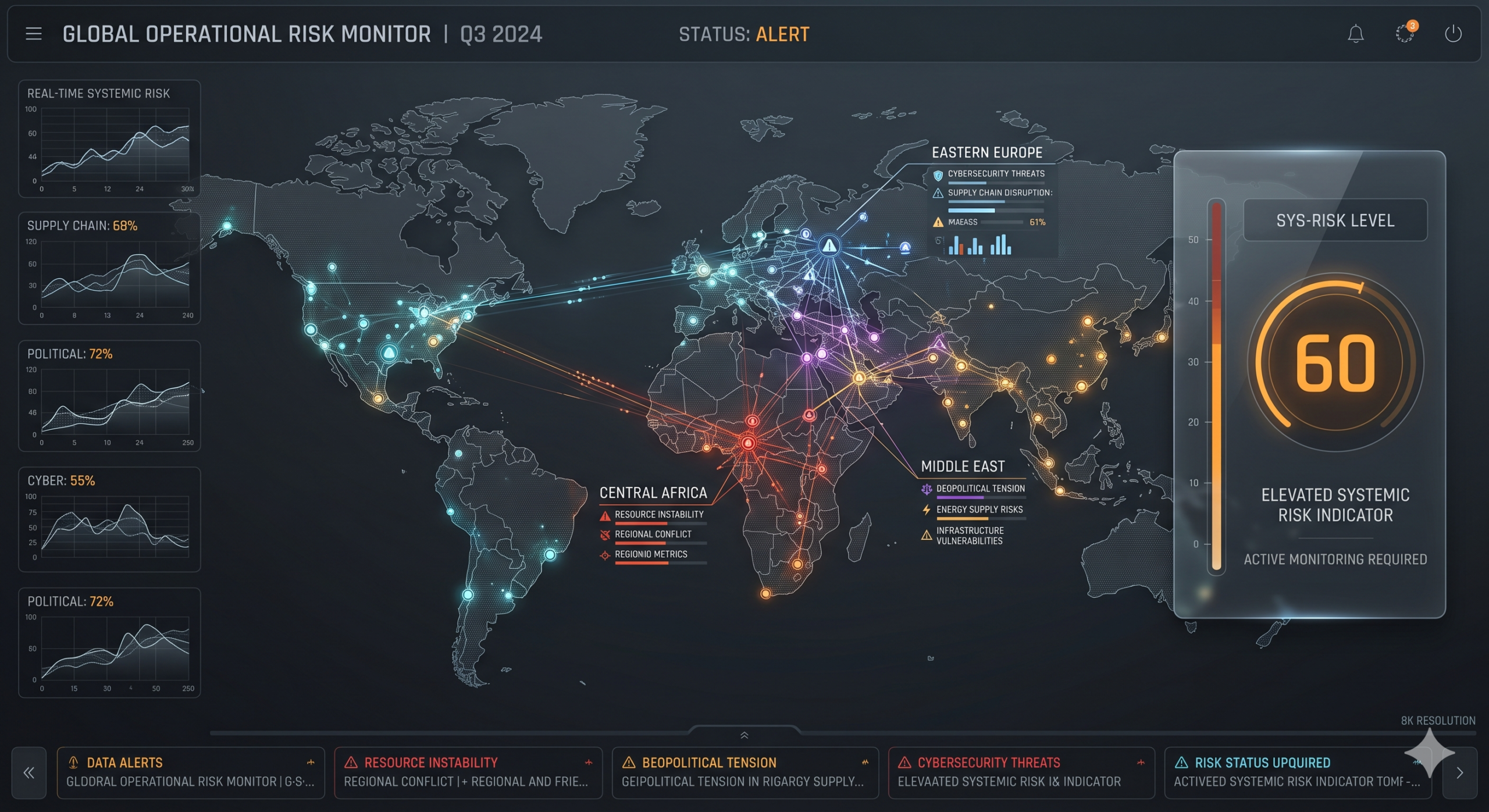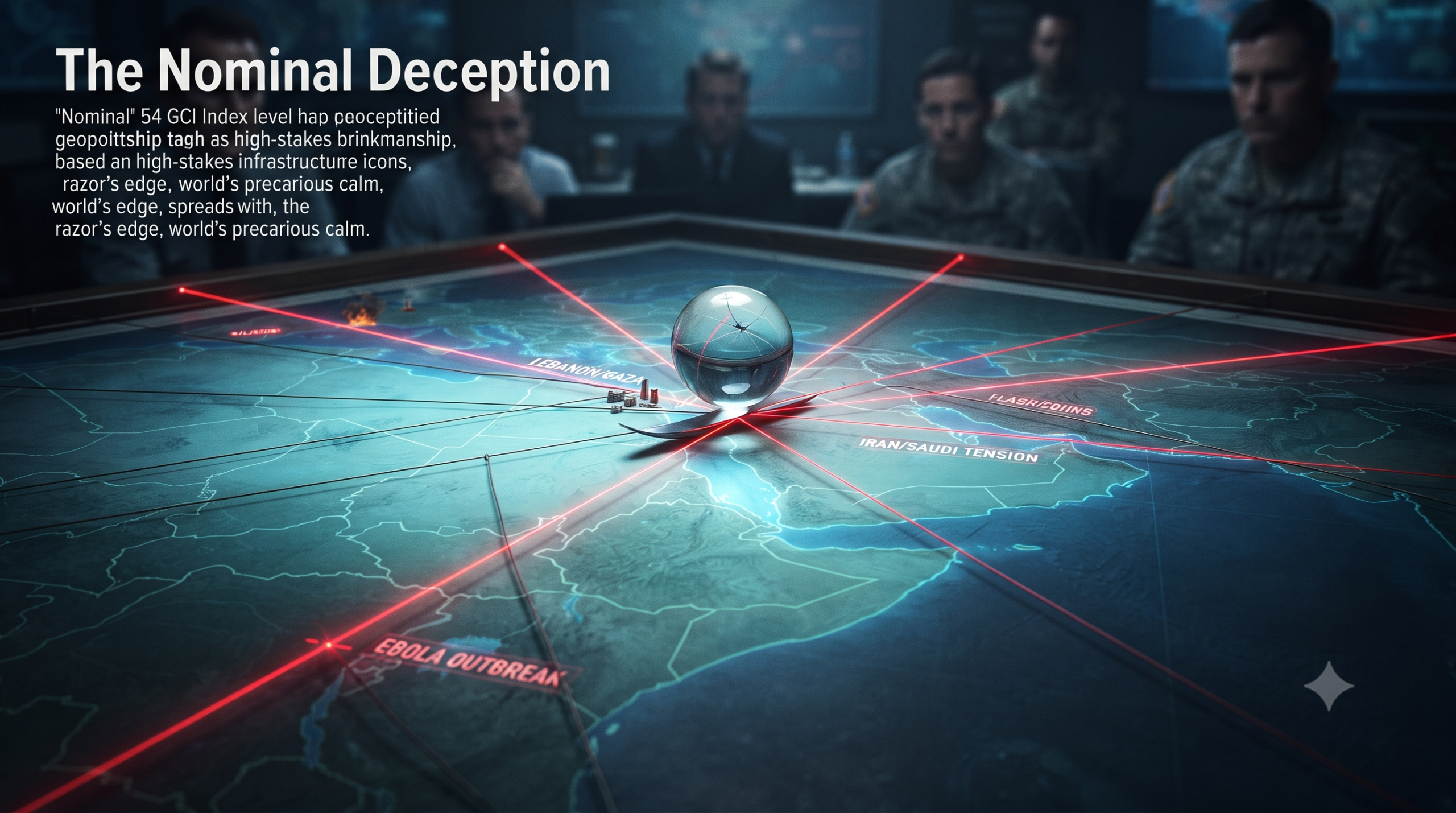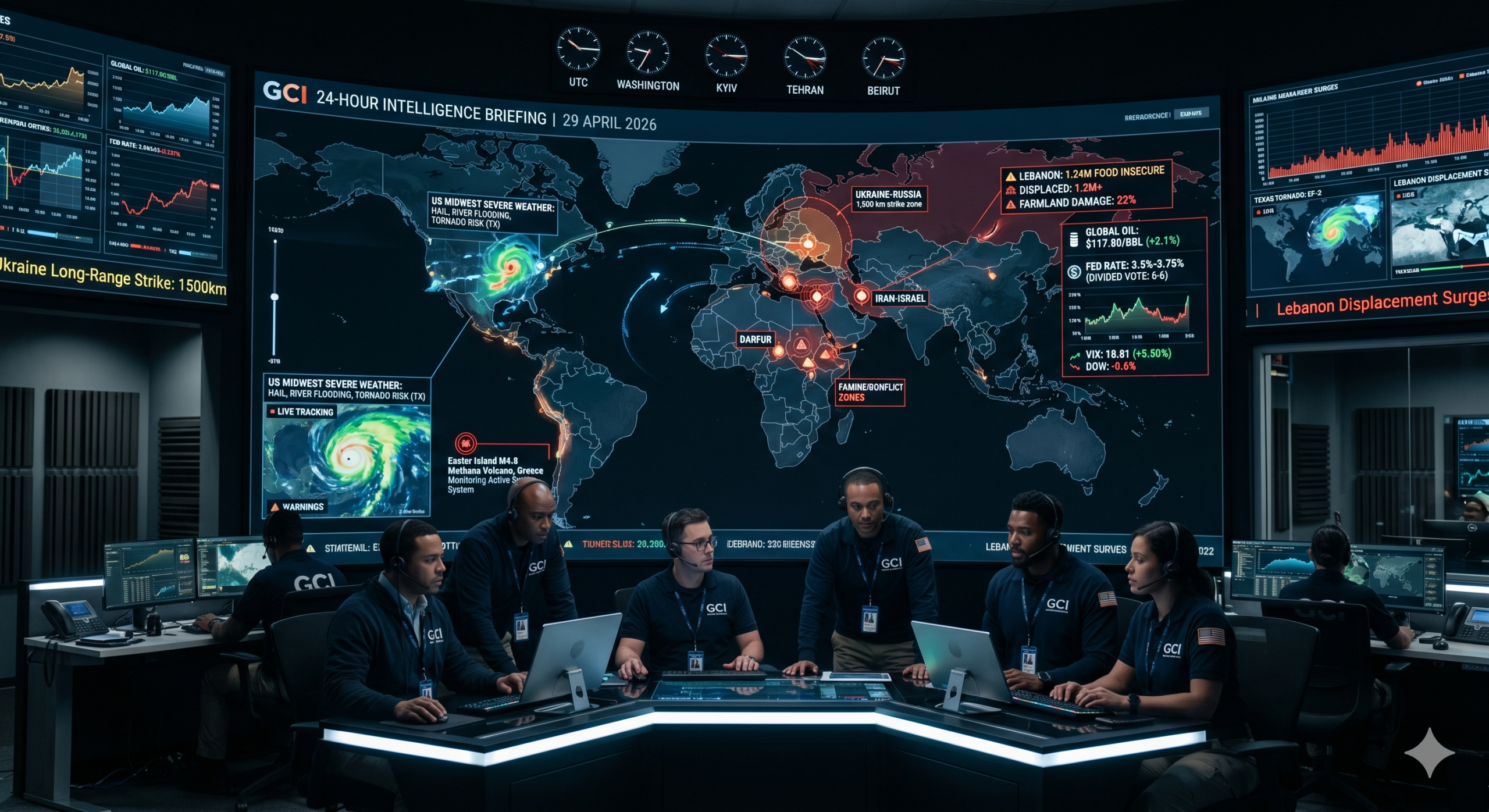
In the post-COVID exhaustion of 2026, the global psyche has grown calloused to the sound of a cough and the flicker of a distant border skirmish. We look for “Big Bang” events to signal the end of an era, but the Watchman Report Alpha-7 , released May 11, suggests that systemic collapse doesn’t arrive with a shout; it arrives with a fade.The report’s Master Index sits at a deceptive 60. In the language of strategic intelligence, this is the vibration of a bridge just before the cable snaps. While “elevated stress” is the clinical headline, the real intelligence is found in the “weak signals” vibrating through the friction of everyday life—the isolation wards of UK ports, the hyper-local freeze watches in the American South, and the literal loss of color in your pantry.
1. The End of Vibrant Packaging: When War Hits the Ink Supply
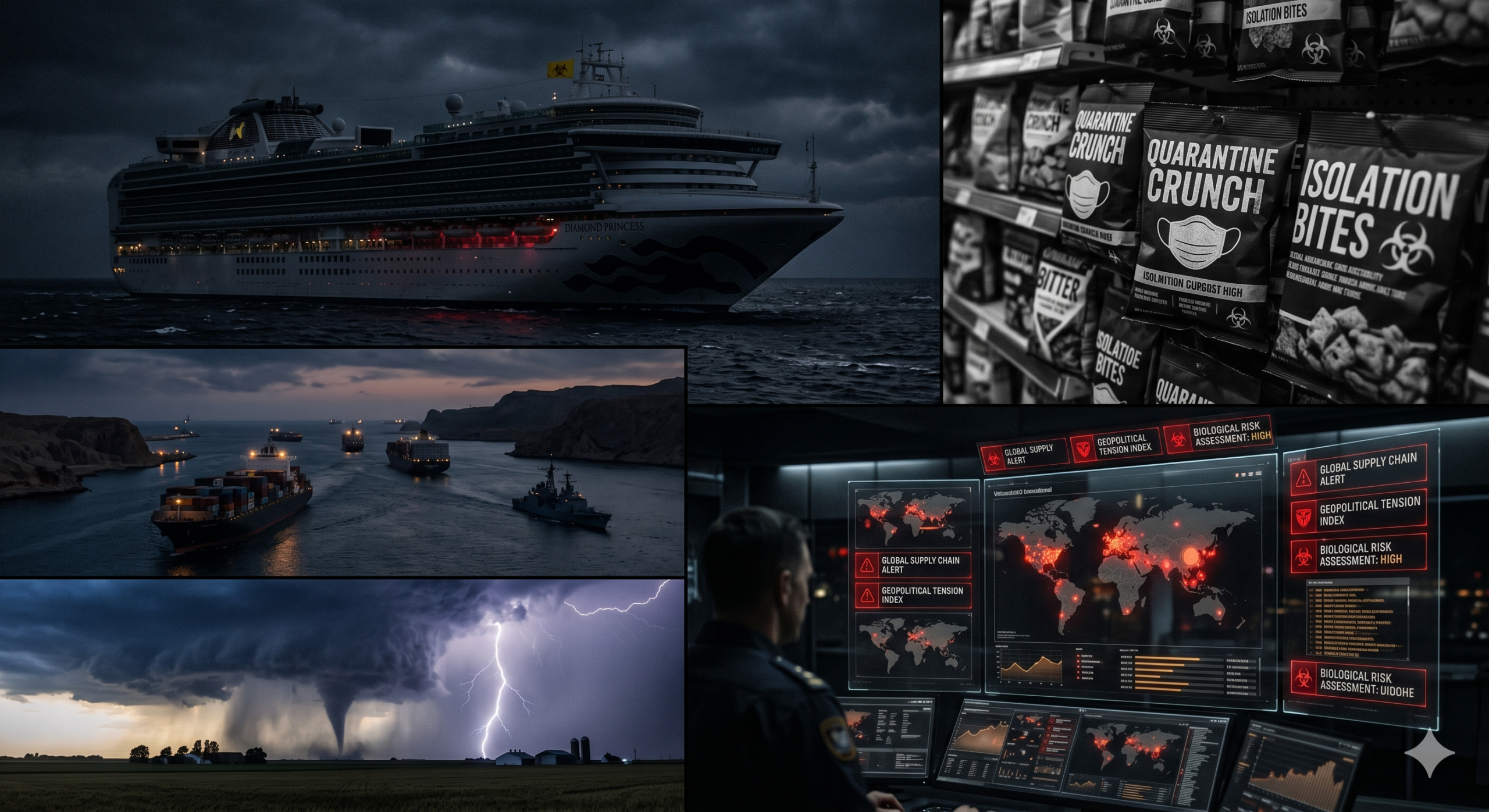
The most arresting detail in the Alpha-7 briefing is not a casualty count, but an aesthetic retreat. As the conflict in the Middle East tightens its grip on the Strait of Hormuz, the shockwaves have reached the grocery aisles of Tokyo.”Japanese snack giant switches to black and white packaging as Iran war hits ink supplies.”To the casual observer, this is a curiosity; to the analyst, it is a “canary in the coal mine” for the global chemical sector. Modern packaging inks are often petroleum-based byproducts or reliant on rare pigments sourced through fragile maritime corridors. When a Japanese conglomerate can no longer source the cyan or magenta for a potato chip bag, we are seeing a total maritime squeeze. This shift to monochromatic branding is a physical manifestation of war-driven supply blockades stripping the “color” out of the global economy, signaling a move toward emergency manufacturing austerity.
2. The Luxury Quarantine: Hantavirus at Sea
The report categorizes Disease Activity at a “Critical” score of 80.0—the highest single driver in the index. While the public remains focused on standard respiratory threats, the 2026 landscape is shifting toward more visceral, exotic pathogens in high-density environments.The Hantavirus-struck hulls of luxury liners represent a new, visceral horror for the travel industry. Passengers from a contaminated ship have recently arrived at a UK isolation facility, while the CDC is scrambling to fly 17 Americans home under high-containment protocols. This isn’t the “new normal” of 2020; it is a pivot toward high-consequence pathogens that require specialized biosecurity. In a world where the VIX (18.08) sits unnervingly close to its historical baseline of 19.5, the sudden permeability of the “safe” luxury travel bubble suggests that our containment systems are struggling to keep pace with the diversification of biological risk.
3. “Massive Life Support”: The Fragility of Modern Peace
The rhetoric regarding Middle Eastern diplomacy has shifted from the professional to the terminal. The Alpha-7 report distills the current state of negotiations through the lens of extreme volatility, punctuated by a blunt assessment from the American executive.”Trump says Iran ceasefire is on ‘massive life support’.”This “massive life support” status is driven by what analysts call “dual-vector stress.” We are witnessing the simultaneous peaking of Disease (80.0) and Ethnic Conflict (76.3). When these vectors overlap, the capacity for diplomatic resolution is suffocated by domestic pressures. After Iran’s latest diplomatic response was characterized by the White House as “totally unacceptable”—a reaction delivered in just “two words”—the stability of the Hormuz becomes a coin toss. Peace is no longer a matter of signatures; it is a struggle to maintain a pulse while biological and social stressors erode the foundations of the negotiating table.
4. The “Atmospheric Compression” of the Dinner Table
There is a dangerous intersection forming between Weather Severity (65.9) and Food Stress (65.5). The FAO Food Price Index has surged to 130.7, a staggering climb from the 108.0 baseline.The report identifies this as “Atmospheric Compression.” We are no longer battling a single “bad season,” but a simultaneous crushing of the agricultural “middle.” On May 11, the U.S. was managing 364 active weather alerts that defy traditional geography: Extreme Heat Warnings melting asphalt in the Coachella Valley and San Diego deserts, while simultaneous Freeze Watches threaten crops in Northwest Pocahontas and Southeast Randolph. When the same nation must battle lethal heat and killing frosts in the same 24-hour cycle, the resulting volatility becomes the new economic baseline, making high food prices a permanent fixture of the “Pang State.”
5. The Domestic Hazard: When Pets Become Pathogens
Even amidst rumors of war and international quarantines, the Alpha-7 report identifies risks at the household level, such as the CDC warning regarding Salmonella cases linked to chameleons.While this may seem trivial compared to a Hantavirus outbreak, the Strategic Futurist sees the decentralization of risk . In a world under dual-vector stress, a domestic Salmonella outbreak isn’t just a pet issue; it is a tax on an already strained healthcare infrastructure. It illustrates that “Global Crisis” is a spectrum that scales from the geopolitical Strait of Hormuz down to the terrarium in a child’s bedroom. Every minor domestic outbreak adds to the “total disease load,” further weakening the system’s ability to respond to the next major shock.
Conclusion: Navigating the Pang State
The Alpha-7 Report defines our current reality as a “Pang State”—a condition where multiple stressors are elevated but have not yet achieved “Active Convergence.” For a full convergence to occur, the report requires a 3-channel simultaneous Pang State (scores ≥72.5). We are currently at two: Disease and Ethnic Conflict.We are holding our breath. The Master Index of 60 tells us the bridge is vibrating, but it hasn’t snapped. The question is whether our global systems—from the way we package snacks to the way we monitor international cruise lines—are designed to withstand this sustained “compression.” Is the black-and-white snack bag a temporary supply chain glitch, or is it the first visible sign of a world where the complexity of our systems has finally outpaced our ability to maintain them? The Pang State suggests we are not in a collapse, but in a tightening—a world where the color is slowly being squeezed out of the frame.