The 2026 global heat crisis has transformed the global landscape into a theater of extremes. From the scorched fields of France and Spain to the rare drought alerts in North Wales, the Northern Hemisphere is locked in a record-breaking struggle against rising temperatures. This is not merely a European phenomenon; the crisis is truly global. Sri Lanka is currently bracing for a severe drought, while in Japan, officials have described the extreme heat gripping Tokyo and three central cities as a “cruel” disaster.
While modern satellite arrays now monitor these wildfires from orbit, capturing the glow of burning forests with high-tech precision, the reality on the ground feels increasingly ancient. It is the story of a parched earth, where the fundamental elements—water, soil, and air—are being pushed beyond their traditional limits.
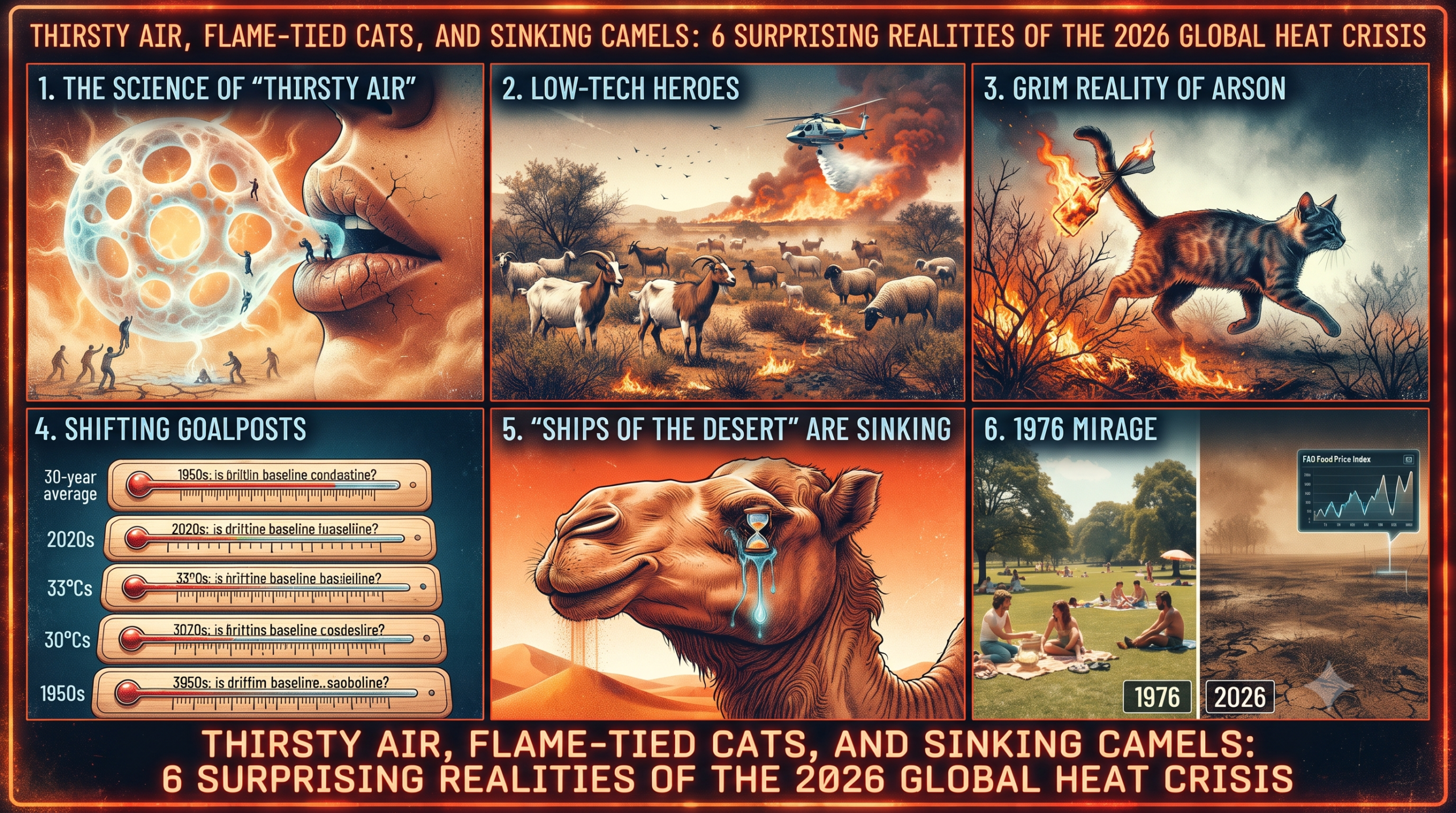
1. The Science of “Thirsty Air”
While we often view heat as a simple measurement on a thermometer, the 2026 crisis has highlighted a more aggressive atmospheric phenomenon. Climate scientists, including senior reporter Esme Salad, describe a process where extreme heat effectively makes the air “thirsty.”
As temperatures soar, the atmosphere’s capacity to hold moisture increases. This creates a relentless feedback loop: the air draws moisture directly out of soils, rivers, and lakes to satisfy its deficit. This process does more than just dry out the ground; it pumps more water vapor into the atmosphere, increasing humidity and making heatwaves feel increasingly unbearable for biological life. This “thirsty air” desiccates vegetation until it becomes the perfect fuel for ignition, transforming heat from a mere seasonal discomfort into an active geological force that physically strips the landscape of its resilience.
“In the first half of this year, heat-driven evaporation across Eastern Europe has been made 40 times more likely because of climate change.” — Dr. Mariam Zachariah, World Weather Attribution Group, Imperial College London
2. Low-Tech Heroes: The Return of the Ancient Undergrowth Patrol
In Spain, where prime minister Pedro Sanchez reports that over a thousand square kilometers have already been incinerated this year, authorities are finding that advanced technology is sometimes less effective than the wisdom of the past. As fast-moving blazes threaten communities near Guadalajara and Toledo—just 75 kilometers south of Madrid—local groups in Galicia have revived a traditional land management method: the “undergrowth patrol.”
By deploying native goats, sheep, and cattle, these communities are creating biological firebreaks. These animals graze on the dry scrub and scrap that would otherwise serve as kindling. There is a profound irony in the fact that while the world’s most sophisticated aerial water-tankers struggle to contain “mega-fires,” the most effective prevention strategy lies in the stomachs of ancient livestock.
3. The Grim Reality of Arson and Environmental Stress
The 2026 fire season has been marked not only by natural tragedy but by disturbing human intervention. In Southern Europe, particularly in Sicily and the Calabria region of Italy, authorities are investigating a surge in arson that highlights a darker layer of the climate crisis.
The reports are exceptionally grim: officials have documented cases where arsonists have utilized animals to spread fire more effectively. This includes the horrific practice of dousing rags in flammable liquids, tying them to the tails of cats, and releasing them into dry brush.
“The authorities are talking about arsonists setting fire to a lot of different places there and also in one particularly grim scenario they say that people have been using rags which have been doused in flammable liquid and tying them to the tails of cats.” — Nick Beak, BBC Europe Correspondent
This intersection of human malice and environmental vulnerability suggests that extreme environmental stress does not exist in a vacuum; it often coincides with a breakdown of social order, where the desperation of the landscape is mirrored by the cruelty of human actors.
4. Shifting Goalposts: Why Heatwaves are Getting Hotter
A “heatwave” is not a fixed temperature; it is a moving target. Technically, a heatwave is declared when maximum temperatures exceed a specific threshold for three consecutive days. That threshold is calculated using a 30-year average for a specific region.
As global temperatures rise, these 30-year averages climb. This means the statistical “marker” for what constitutes an extreme event is being moved upward. Data indicates that a temperature of 30°C, which would have triggered a heatwave alert in the 1950s, is now considered closer to the baseline. Today, that same threshold may not be reached until 33°C. This statistical drift is dangerous; by redefining “normal” to accommodate a warming planet, we mask the true severity of the change, making it increasingly difficult for aging infrastructure to keep pace with conditions once considered impossible.
5. Even the “Ships of the Desert” are Sinking
The resilience of the natural world is reaching its breaking point, and no animal illustrates this more clearly than the camel. Long considered the gold standard for desert survival, camels in Africa are now failing to cope with the 2026 extremes.
The primary issue is the intensity and duration of the heat; temperatures of 50°C and above are now lingering through the night. Without a cooling-off period, these “ships of the desert” are becoming dehydrated, lethargic, and weak. This physiological stress has led to a collapse in milk production, poor meat quality, and a failure to reproduce. If the most heat-resilient animal on the planet is beginning to succumb, it serves as a definitive indicator that we are moving out of a “manageable” crisis and into an ecosystem-wide collapse.
6. The 1976 Mirage: Why This Isn’t Your Parents’ Heatwave
In the UK, many seek comfort by comparing the current crisis to the infamous heatwave of 1976. However, the data renders the comparison obsolete. While the 1976 peak of 35.9°C was a historic anomaly, that threshold is now breached regularly. Furthermore, the UK is currently on track for its driest July in 190 years.
The economic indicators are equally stark. In 1976, the heat caused a 50% drop in barley crops. Today, the stress on the food system is even more pronounced. The FAO Food Price Index hit 130.3 in July 2026, significantly higher than the 108.0 baseline from 2014-16. Relying on nostalgia for past heatwaves is a dangerous form of climate denial; the 1976 event was a deviation from a stable norm, while 2026 is a manifestation of a new, volatile reality.
Conclusion: A Converging Polycrisis
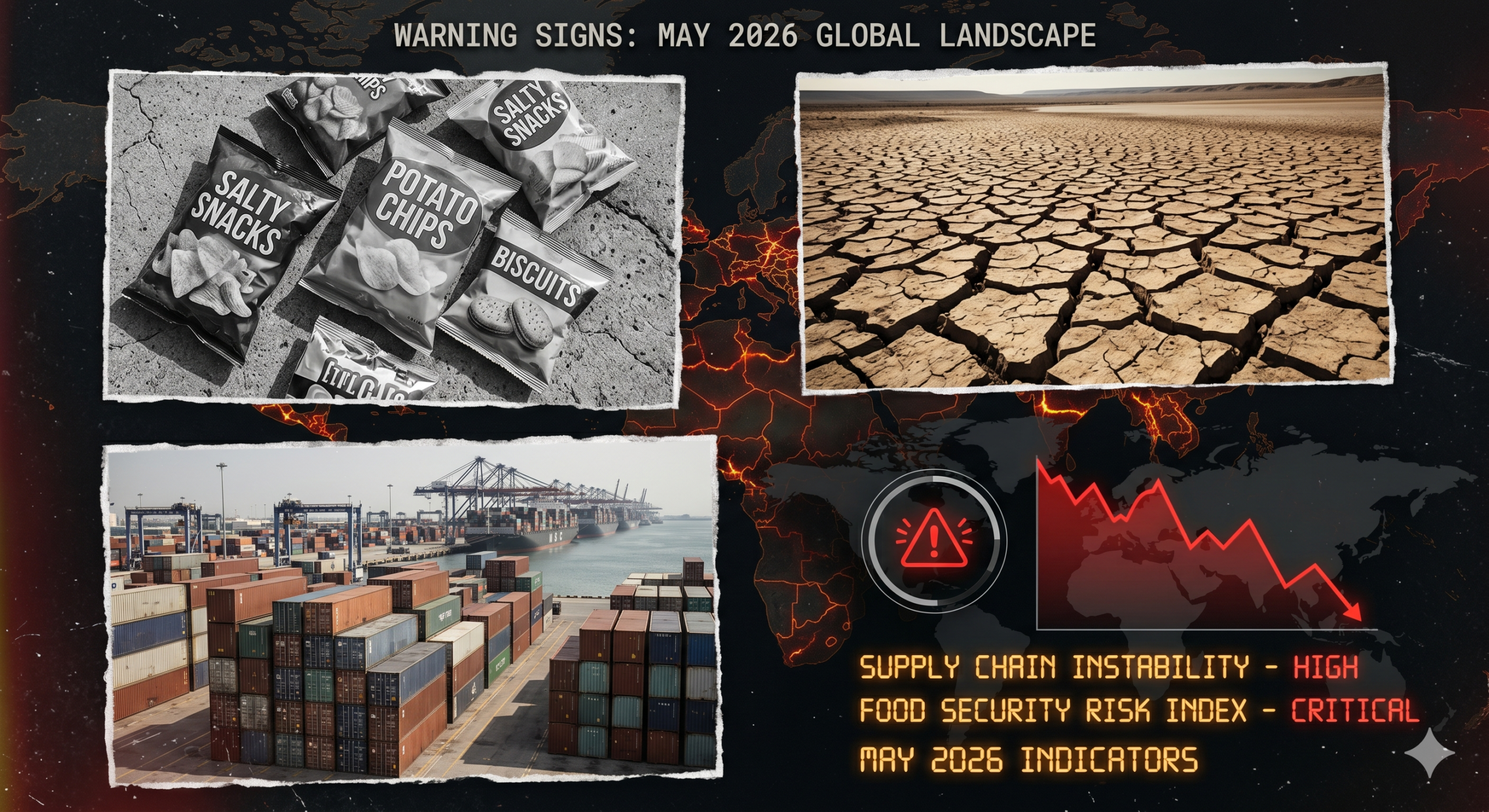
The 2026 heat crisis does not exist in isolation. It is converging with a global landscape of geopolitical instability. As “thirsty air” dries out global breadbaskets, conflict in the Middle East—including Houthi attacks on shipping and Iranian threats to US bases—has pushed oil prices back over $100 a barrel.
This creates a “polycrisis”: the very energy required for drought mitigation, such as high-capacity water pumping, desalination, and large-scale aerial firefighting, has become significantly more expensive just as it is needed most. When food stress, record-high energy costs, and unprecedented weather severity intersect, the global system faces a “nominal” state that is anything but normal. As we look toward the remainder of the year, we must ask: Is our definition of “extreme” prepared for a world where “thirsty air” is the new baseline?