Good evening. Here is your Global Crisis Intelligence Briefing for May 17th, 2026.
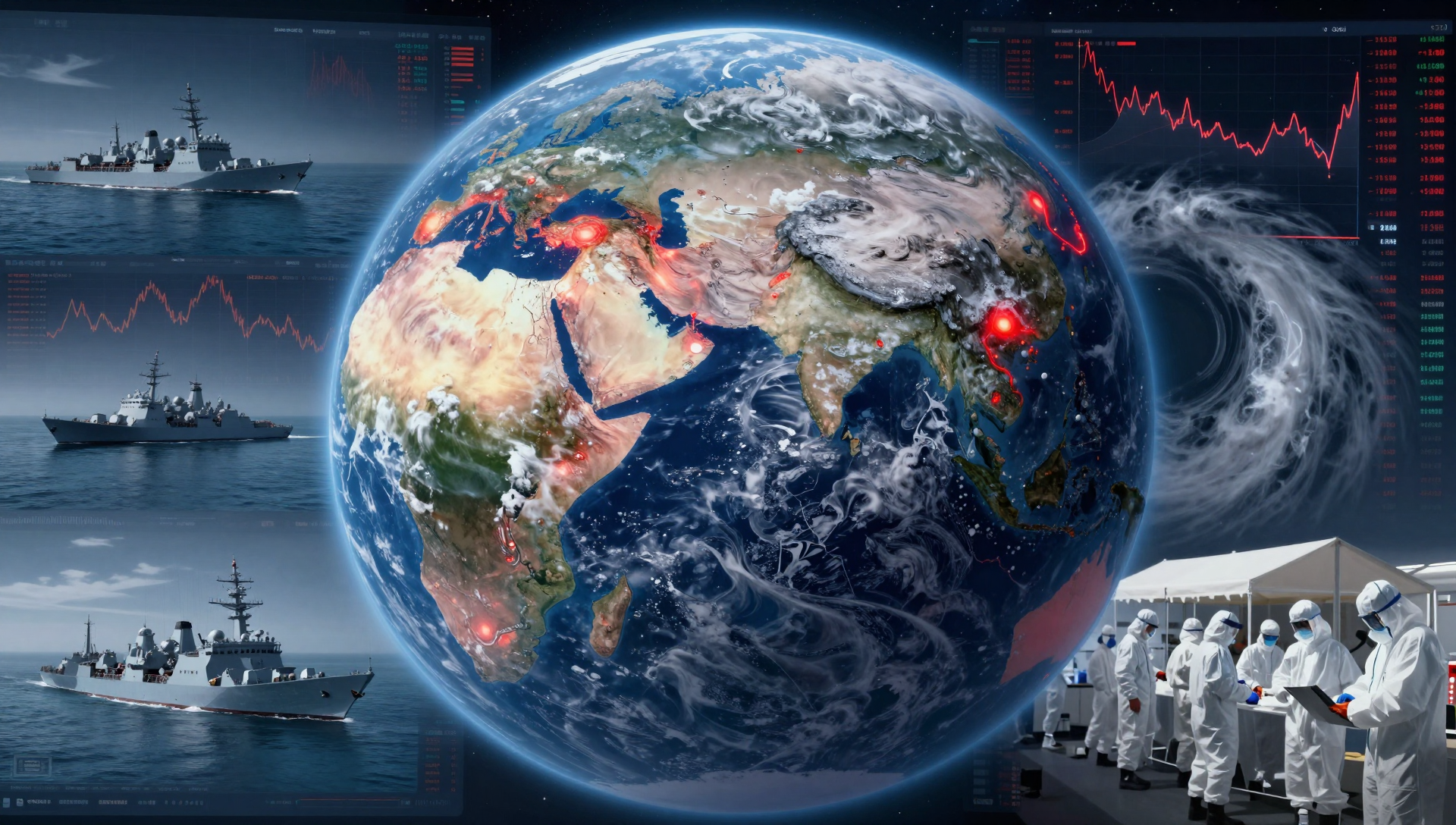
As of May 17, 2026, global monitoring agencies are warning that multiple international pressure points are beginning to converge at the same time, creating what analysts describe as an elevated and increasingly unstable global environment. According to the latest Global Crisis Intelligence assessment, the world is now operating under heightened volatility conditions as disease outbreaks, geopolitical tensions, severe weather events, and food supply disruptions continue to intensify across multiple regions.
The Global Crisis Intelligence Master Index currently stands at 64, a level categorized as “Elevated.” While the index remains below the threshold associated with full systemic convergence, experts are now tracking three major crisis sectors that have entered what is being referred to as a “Pang State.” Those categories include Ethnic Conflict, Disease Activity, and Weather Severity.
Disease activity remains one of the most urgent concerns in the latest briefing. The World Health Organization has officially declared the Ebola outbreak in the Democratic Republic of Congo a global health emergency. Current reports indicate that at least 80 people have died as containment efforts continue in affected areas.
Health officials are also monitoring renewed concerns surrounding Hantavirus after a reported death in Colorado. Authorities stress that the case is not connected to recent cruise ship outbreaks, but the incident has nevertheless renewed public attention on outbreak preparedness and the vulnerabilities exposed during the COVID-19 pandemic.
Intelligence analysts are warning that health infrastructure stress may soon intersect with growing civil unrest in several regions. Officials fear that instability at the local level could compromise regional governments’ ability to effectively manage and contain outbreaks if conditions continue to deteriorate.
Geopolitical tensions also remain elevated across several active theaters of conflict. One of the most closely watched developments involves the Strait of Hormuz, where Iran has unveiled a plan to charge fees for passage through the strategic waterway. The announcement has drawn immediate resistance from the United States, with American leadership insisting that U.S. forces are fully capable of maintaining access and reopening the waterway if necessary.
Meanwhile, violence continues across the Middle East. Lebanon has reported six deaths following an Israeli strike, while Hezbollah has released footage showing expanding drone strike capabilities. Despite the continuing kinetic activity, regional officials have announced a ceasefire extension, though analysts remain cautious about long-term stability.
The USS Gerald R. Ford has now returned home following an extended deployment that included support operations tied to the war with Iran and the capture of Nicolás Maduro. In Eastern Europe, the ceasefire in Ukraine remains technically active, but intelligence reports describe the situation as increasingly fragile amid reports of additional strikes and continued instability.
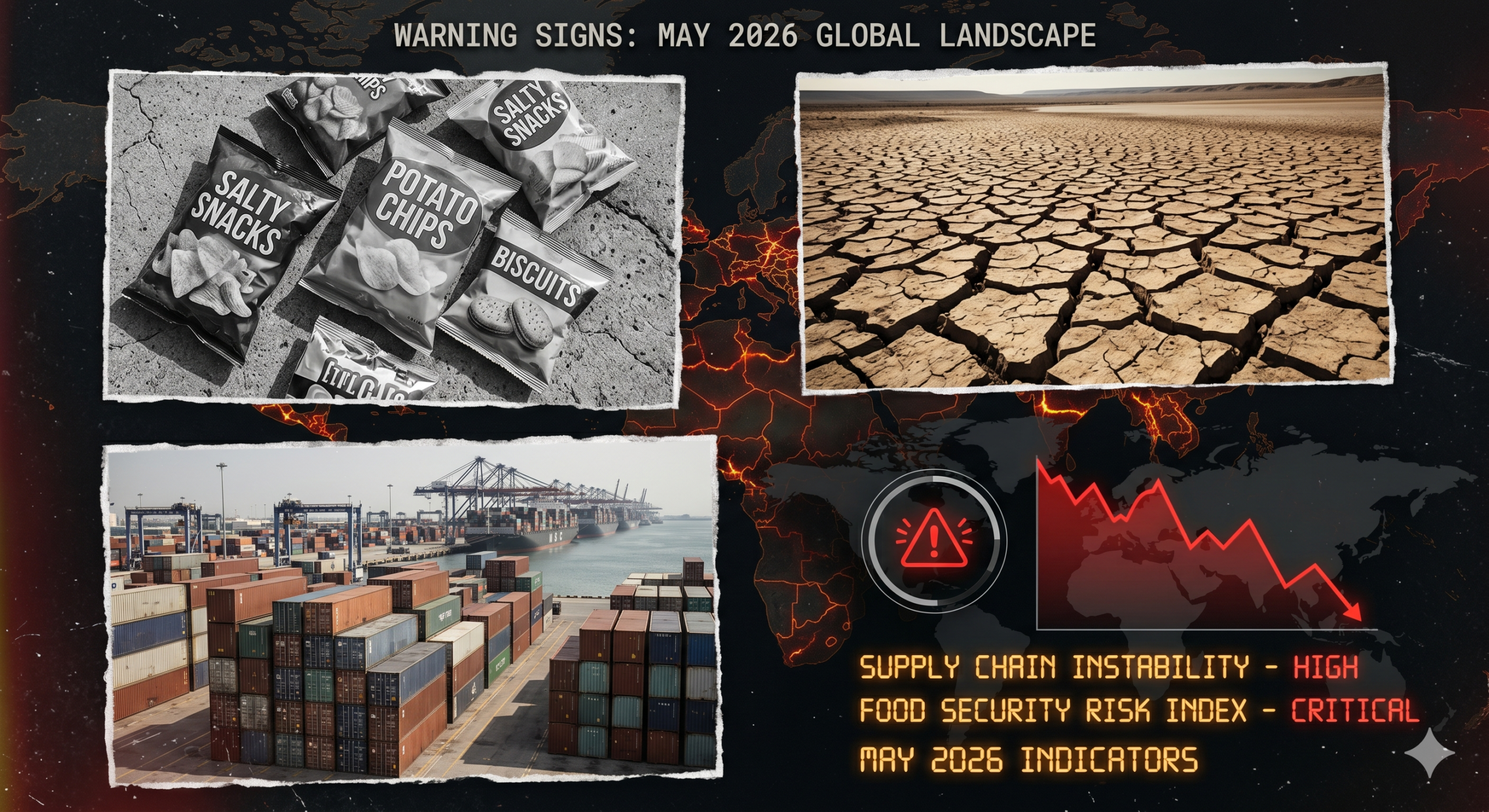
Another major concern in the report centers on the growing relationship between severe weather activity and global food stress. Analysts say atmospheric disruptions are beginning to compress agricultural production in several critical regions.
The FAO Food Price Index has climbed to 130.7, significantly above the long-term baseline of 108.0. Officials say severe weather conditions, supply disruptions, and drought conditions are contributing directly to rising food costs and tightening agricultural output.
In the United States, NOAA currently lists 466 active weather alerts, including dangerous wind warnings impacting parts of California such as Santa Barbara County and the Ventura County mountain regions.
International humanitarian monitoring agencies are also tracking expanding drought conditions across large sections of Central and Western Africa, including Angola, the Democratic Republic of Congo, Gabon, and Zambia. Additional drought alerts remain active in parts of Argentina and Uruguay.
Despite the growing instability across multiple sectors, financial markets have not yet fully mirrored the broader crisis environment. The CBOE Volatility Index, commonly known as the VIX, currently sits at 18.43, slightly below its long-term historical average.
Localized civil unrest, however, continues to emerge in several areas. In the United Kingdom, riot police were deployed in Glasgow following serious disorder involving Celtic football fans celebrating a Premiership title victory.
Analysts now warn that the greatest danger may not come from any single crisis alone, but rather from the convergence of several stress factors occurring simultaneously. The intersection of weather severity and food stress is already impacting global agricultural output, while the overlap between disease activity and civil instability raises concerns about possible infrastructure failures in vulnerable regions.
For now, the Global Crisis Intelligence Index remains at an elevated level of 64. But experts caution that continued convergence between conflict, disease, severe weather, and food insecurity could rapidly accelerate global instability in the weeks ahead.